
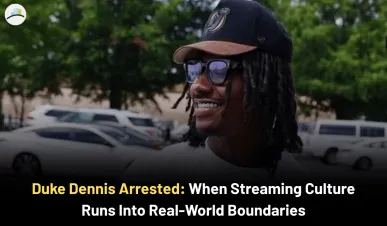
Content Meets Consequence in San Antonio
Duke Dennis, a prominent content creator and member of the AMP collective, was arrested in San Antonio over the weekend and charged with criminal trespassing and evading arrest. The incident reportedly stemmed from an unsanctioned filming event at a local shopping mall, where Dennis and other AMP members were seen recording a chaotic game of hide-and-seek. A video clip of Dennis seated on the floor in handcuffs quickly went viral, prompting questions about where the line is between performance and disruption.
This wasn’t an isolated act. AMP is known for pushing the envelope—public pranks, improvised events, and unpredictable crowd interactions. But in this case, that high-energy content creation style collided with private property laws, business liabilities, and local law enforcement. When influencers film without permits or escalate activity in commercial spaces, it’s not just security that responds—it’s the criminal justice system.
ICYMI: Duke Dennis was arrested while playing hide and seek with Kai Cenat in a mall
— Yonny (@YonnyBravo__) August 4, 2025
He's being held on charges of criminal trespass and arrest evasion. pic.twitter.com/x0k2uj4WtR
Why This Is Bigger Than a Trespass Charge
The AMP brand has built a fortune and following on spontaneity. But as their visibility grows, so does the scrutiny. Cities and businesses are increasingly wary of large online personalities using public or private spaces without prior approval. It’s not just about permission—it’s about public safety, property rights, and crowd control. Once an event disrupts business operations or triggers law enforcement intervention, it moves from prank territory to legal jeopardy.
Dennis’ arrest also highlights a broader issue facing creators: the disconnect between digital hype and real-world rules. Social media rewards chaos—algorithmically and financially. But offline, the rules are different. The more creators operate in physical environments, the more they’ll need to act like event planners, not just entertainers.
MORE ARTICLES:
The Hidden Risk for Brands and Collaborators
This incident may seem like a personal legal hiccup, but it sends ripples across AMP’s growing influence in gaming, streetwear, and media partnerships. When one member gets arrested mid-filming, it invites reputational risks—not just for Dennis but for every AMP brand partner and future deal.
Companies investing in creators like AMP need to reckon with the unpredictable nature of their content. Do they have protocols for location permits? Are risk mitigation strategies in place? As more creators evolve into media companies, the boundaries between influencer spontaneity and professional responsibility are blurring. Dennis' arrest may serve as a wake-up call for the entire industry.
What’s Being Missed in Most Coverage
The conversation so far is centered on whether the prank went too far or not. But the real issue isn’t the prank—it’s the structure around it. Influencer culture is scaling faster than local regulations can handle. And many creators aren’t trained in the kinds of legal, spatial, and community considerations that traditional productions would plan for.
This arrest shows that what used to be chalked up as harmless fun now comes with real consequences. Not because creators have changed—but because their audience has grown. With millions watching, their actions have weight. And the system—legal, economic, and cultural—is finally responding.
Why This Story Matters
Duke Dennis’ arrest isn’t just a cautionary tale. It’s a case study in how digital fame and physical spaces are colliding more frequently—and not always peacefully. It shows that as streamers turn into celebrities and YouTube collectives become content empires, the rules shift. What you can get away with in a livestream doesn’t always fly in real life. And the more that creators ignore that gap, the more the law—and the public—will push back.



