
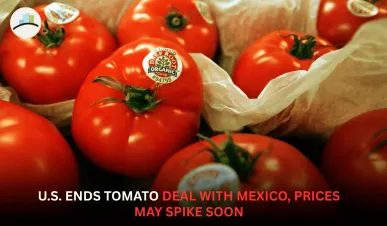
U.S. Quits Tomato Deal with Mexico: Food Fight or Trade War in Disguise?
In a surprising move with far-reaching implications, the U.S. Department of Commerce has officially withdrawn from the longstanding tomato suspension agreement with Mexico, effective immediately. While the move is being framed as a response to persistent concerns over unfair pricing and enforcement challenges, the real story goes deeper—into the politics of protectionism, the weaponization of food supply chains, and a potential blow to North American trade stability.
Tomato prices projected to increase as administration ends trade agreement with Mexico
— Knox News (@knoxnews) July 14, 2025
https://t.co/sGWiEIqlVA
Why This Happened: Political Pressure Meets Economic Nationalism
-
U.S. growers' lobbying finally pays off
Domestic tomato producers, especially in Florida and other southern states, have long argued that Mexican imports undercut prices and threaten local farms. Their persistent lobbying, backed by key political figures in election battleground states, seems to have tipped the scales. -
Enforcement fatigue or economic strategy?
Officials cited difficulty in enforcing the 2019 suspension agreement terms, which were designed to prevent Mexico from "dumping" tomatoes at unfair prices. But trade analysts suggest this withdrawal also aligns with a broader pattern of U.S. economic nationalism under both Democratic and Republican leadership.
What’s Not Being Discussed Enough: Hidden Costs to Consumers and Supply Chains
-
Higher grocery prices ahead
Mexico supplies over 50% of fresh tomatoes consumed in the U.S. year-round. The removal of the deal could lead to new duties or quotas, directly increasing prices at the supermarket. Consumers may see a 10–20% hike on tomatoes and related products. -
Supply chain whiplash for importers
U.S. food importers, retailers, and restaurant chains—already dealing with inflation and labor shortages—now face an unstable tomato supply chain, with added costs and logistical uncertainty.
More Articles:
The Geopolitical Angle: NAFTA’s Shadow Looms Again
-
Strain on USMCA framework
The U.S.-Mexico-Canada Agreement (USMCA) was meant to provide a stable framework for trade across North America. This move threatens to reignite trade tensions, with Mexico expected to retaliate via the World Trade Organization or impose countermeasures. -
A warning signal to other exporters
If tomato producers can trigger this reversal, other agricultural sectors—like berries or avocados—could soon face similar scrutiny, making the U.S. a more unpredictable trade partner.
Historical Parallel: Echoes of the 1990s Tomato War
This isn’t the first tomato standoff. In the mid-1990s, similar disputes arose, leading to price crashes and farm closures. That conflict was only resolved through a suspension agreement—which the U.S. just exited. History may be repeating itself, but with far more complex geopolitical stakes.
Hidden Opportunity: Can This Spur Domestic Innovation?
-
Boost for greenhouse farming
U.S. growers could now receive greater incentives to expand greenhouse tomato production, improving year-round output and crop resilience. -
Tech-driven traceability
The dispute may also accelerate adoption of digital supply chain tracking and price monitoring tech, to pre-empt future dumping allegations.
The Bottom Line: Strategic Agriculture or Short-Term Politics?
While the U.S. claims enforcement failure, this move smells more like strategic agriculture wrapped in short-term politics. As prices rise, trade relations tense up, and the tomato supply faces disruption, Washington may soon need to weigh whether protectionism delivers more than it costs.



