
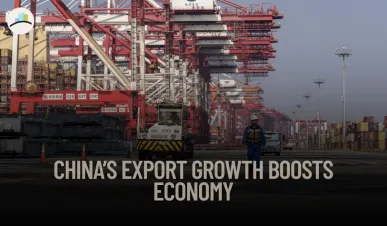
In June 2025, China’s exports recorded a robust increase of 5.8% year-on-year, exceeding market expectations which forecasted a more modest 5.0% rise. This jump marks the fastest export growth China has experienced since March of the same year. The surge in shipments reflects a strategic push by exporters to capitalize on a fragile 90-day trade ceasefire between the U.S. and China, which is set to expire around mid-August.
Imports also showed signs of recovery, growing 1.1%—the first positive increase since February—signaling renewed demand for foreign goods within China. This import growth, combined with the export gains, contributed to a substantial trade surplus of approximately $115 billion, underscoring the crucial role that international trade continues to play in sustaining China's economic expansion during a period of global uncertainty.
More Articles:
U.S. Shipments Rebound but Year-Over-Year Decline Persists
Shipments bound for the United States rebounded sharply on a monthly basis, climbing 32.4% compared to the previous month. This uptick is largely attributed to the tariff relief afforded by the current trade truce, which has temporarily eased the cost pressures on exporters. Despite the month-over-month improvement, exports to the U.S. remain down approximately 16% compared to the same period last year. This is a significant improvement from May’s 34% year-over-year decline but still reflects the lingering effects of tariffs and trade tensions.
This dual dynamic—monthly improvement amid persistent yearly contraction—indicates that Chinese manufacturers are front-loading shipments to beat impending tariff deadlines rather than signaling a full recovery in U.S. demand.
Diversification into ASEAN and European Union Accelerates
China’s exporters are increasingly redirecting shipments away from the U.S. market toward other key regions, especially the Association of Southeast Asian Nations (ASEAN) and the European Union (EU). Exports to ASEAN countries surged by an estimated 16–17%, while shipments to the EU grew by roughly 7–8%. This pattern aligns with China’s broader economic strategy to diversify its trade partnerships amid geopolitical tensions, reducing over-reliance on any single market.
This export realignment also reflects ongoing efforts to reshape supply chains under initiatives such as “Made in China 2025,” which aims to upgrade manufacturing capabilities while fostering stronger regional economic ties.
Structural Implications and Persistent Risks
Trade remains a vital engine for China’s economy, accounting for nearly 40% of economic growth in the first quarter of 2025. While June’s data provide a welcome reprieve, the sustainability of this momentum remains in question due to several key risks:
-
The temporary 90-day U.S.-China tariff truce is scheduled to expire in mid-August. Should the ceasefire collapse, re-imposition of tariffs could sharply curtail export growth and disrupt trade flows.
-
Continued U.S. trade measures, including tariffs on critical sectors such as technology and rare earths, constrain China’s long-term export potential and create uncertainty for businesses.
-
Weak domestic demand and muted infrastructure investment within China are limiting internal consumption, increasing the economy’s dependence on external markets for growth.
Procapitas View: Tactical Bounce or Lasting Shift?
China’s recent export growth appears to be a tactical move to leverage the tariff truce and sustain economic momentum. However, this spike likely masks deeper vulnerabilities within the economy:
-
The surge may be largely driven by front-loaded shipments, which could lead to export fatigue and a slowdown in the third quarter if demand does not normalize.
-
While diversification into ASEAN and the EU is positive, these shifts come with increased logistics costs and complexity that may impact profit margins over time.
-
The persistent weakness in domestic consumption points to an urgent need for economic rebalancing, as over-reliance on exports makes China vulnerable to external shocks.
🇨🇳 #China Emerges From Trade Chaos With Record Exports and Surplus - Bloomberghttps://t.co/9ENrYDbUO8 pic.twitter.com/hhMbPXy9vr
— Christophe Barraud🛢🐳 (@C_Barraud) July 14, 2025
Key Factors to Watch in the Coming Months
-
The outcome of the U.S.-China tariff truce negotiations as the August expiration date approaches will be critical in shaping export trends.
-
Trade volumes from ASEAN and EU markets during peak shipping seasons will provide insight into whether recent export shifts represent lasting realignments or temporary adaptations.
-
Domestic policy responses, including potential stimulus measures and monetary easing, will be important to monitor as Beijing seeks to mitigate external risks and boost internal demand.
Disclaimer:
This article is intended for informational purposes only and does not constitute investment advice. Procapitas does not provide personalized financial recommendations. Always consult a licensed financial advisor before making investment decisions. Information is based on publicly available sources as of June 2025 and Procapitas’ independent research and analysis.



