
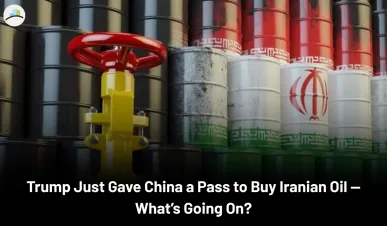
In what felt like a quiet but pretty major shift, President Trump recently said that China can go ahead and keep buying oil from Iran. Now, if you’ve been following U.S.–Iran relations, that might sound like a surprising move — especially considering how tough Trump has been on Iran in the past. But there’s more going on behind the scenes, and this isn’t just about oil. It’s about trade, diplomacy, and maybe even the next phase of Trump’s strategy in the Middle East.
@FirstSquawk Remember when Trump swore China couldn’t touch Iranian oil without losing US access? On 04-14-2025, he barked: “I told China, you can’t buy oil from Iran… we no longer want you to do business with the US.”
— factchecktrump (@_factchecktrump) June 25, 2025
Now he’s handing Beijing a VIP pass to Iranian crude…
Why Trump Might Have Done This
Honestly, the timing of this move is no coincidence. A few days ago, the U.S. launched strikes on Iranian nuclear sites, and now there’s talk of a ceasefire between Iran and Israel. Oil prices were climbing fast — and for any sitting president, that’s a problem. People don’t like paying more at the pump. So, allowing China to buy Iranian oil might be Trump’s way of calming things down economically without backing off politically.
It also gives him a new card to play with China. He’s in the middle of tough trade talks, and letting China import oil from Iran might be something he can use as leverage to get a better deal on the table.
What This Could Mean for Oil Prices and Trade
The markets definitely noticed. Right after the announcement, oil prices fell by around 6%. That’s a big dip. It means the world believes there might be a little more supply and a little less tension — at least for now. Stocks went up, and things settled down a bit.
For regular people, this could mean slightly cheaper fuel and maybe even lower costs on goods that rely on shipping and transport. But for U.S. oil producers, lower prices might squeeze profits. And for Iran, it means a possible new cash stream that could help its economy, which has been under a lot of pressure lately.
What’s Not Being Talked About Enough
Here’s what’s getting missed in a lot of the headlines: this move gives Iran and China a chance to get even closer. China already imports a decent chunk of its oil from Iran, even under sanctions. Now, with this quiet green light, that partnership could grow — not just in oil, but in long-term energy deals, infrastructure, and possibly military or tech support down the road.
Also, what message does this send to the rest of the world? If the U.S. makes exceptions like this, other countries might think American sanctions are flexible — maybe even negotiable. That could weaken the power of future sanctions, especially against places like Venezuela or Russia.
More Articles:
The Risks and the Upside
There are risks here, no doubt. Some people are already saying this makes the U.S. look inconsistent. If you punish one country but give another a pass when it suits you, that can create confusion — and even resentment. Plus, if Trump’s opponents paint this as softening on Iran, it could be a political headache for him.
But there’s also potential upside. If this move encourages Iran to stay calm, it might help keep the peace in the Middle East — at least for a while. And if China plays along in trade talks, Trump could use this as a win on multiple fronts. It’s a gamble, but it’s not without logic.
Final Thoughts
This wasn’t a big announcement with a press conference or dramatic headline. It was more of a subtle shift — a social media post, a change in tone. But don’t be fooled by how quietly it happened. Letting China buy Iranian oil could shape what happens next in trade, diplomacy, and even how the U.S. uses sanctions going forward.
For now, it’s just a move. But what comes next — how Iran, China, and U.S. allies respond — that’s where the real impact will be. This could either help calm things down, or it could set off a new wave of complications the world isn’t ready for.



