
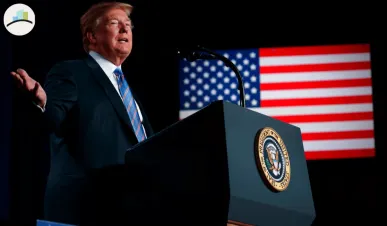
In a sharp turn of message, President Donald Trump stated that the United States is not planning strikes within Venezuela—a claim that surprises many given the recent heavy U.S. military buildup in the Caribbean and Latin American region. While his words suggest a pause, the scale of U.S. deployments and previous remarks hint that the real story may be far from over.
What Trump Actually Stated
On a recent flight from Washington, when asked whether the U.S. was preparing military strikes on Venezuelan territory, Trump simply responded: “No.”
Yet only days earlier, his own rhetoric suggested otherwise—he had remarked that the “land is going to be next” when referring to anti‑drug efforts linked to Venezuela. The change in tone has left analysts wondering whether this is a full reversal, a strategic recalibration or simply a public repositioning.
MORE ARTICLES:
The Tension Behind the Message
-
The U.S. has deployed warships, fighter jets and thousands of troops in the region, signaling a very real readiness for action—even as officials now deny intention to strike Venezuelan soil.
-
Despite the “no strikes” headline, U.S. covert activities—including authorisation for the Central Intelligence Agency to operate within Venezuela—continue to drive speculation about what lies next.
-
Venezuela is watching closely. President Nicolás Maduro and his allies are warning of intervention, accusing Washington of undermining regional sovereignty and raising fears of escalation.
What This Could Lead To
-
Public pause, private plans: The denial may be tactical. Washington could be buying time while building options, rather than backing away from them.
-
Diplomatic pivot: The White House may switch to diplomacy or economic pressure for now, yet keep military tools at the ready.
-
Regional ripple effects: Nations in Latin America and the Caribbean are assessing how this U.S. shift affects their alliances and security postures.
-
Legal and Congressional pressure: With rising scrutiny over actions undertaken without formal war declarations, Trump’s clear “no” could ease immediate tension—but not long‑term political risk.
What to Watch Next
-
Will troop deployments remain or be scaled down? The movement and location of ships and aircraft will speak louder than words.
-
Will the U.S. clarify the scope of its “no strikes” policy—are covert actions or indirect strikes still on the table?
-
How will Venezuela and regional neighbours respond? Changes in mobilization or diplomatic moves may signal what happens behind the scenes.
-
How will Congress react? If lawmakers press for authorisation or oversight, we could see major shifts in U.S. policy or exposure of hidden operations.



