
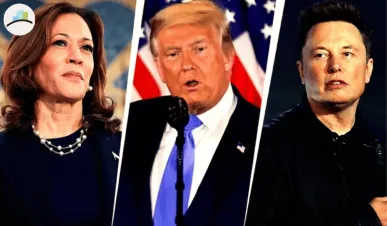
In a bold and shocking revelation, Kamala Harris, the U.S. Vice President and Democratic presidential candidate in 2024, is accusing tech billionaire Elon Musk of playing a pivotal role in her narrow defeat to Donald Trump. In her new memoir, 107 Days, Harris claims that Musk’s millions of dollars spent on supporting Trump’s campaign were the deciding factor in the election.
With the 2024 election still fresh in the minds of Americans, this explosive claim is sending shockwaves through the political landscape. Could it be true? Was Elon Musk really the unseen hand behind Trump’s victory? Harris argues that the billionaire’s influence in critical swing states tilted the balance in favor of Trump, ultimately costing her the presidency.
What Did Kamala Harris Actually Say?
In her memoir, Harris describes how the 2024 presidential race came down to razor-thin margins in key swing states like Arizona, Michigan, and Pennsylvania. According to Harris, Musk’s financial backing played a key role in these critical battleground states, where the fight for the presidency was ultimately decided.
-
Harris’s Accusation: Harris states that Musk’s political influence wasn’t just limited to his billion-dollar fortune, but also extended to his control over social media platforms, which she claims played a role in shifting public opinion in favor of Trump.
-
Swing States as the Key Battlegrounds: The states Harris names as the most critical in her defeat include Arizona, Georgia, Michigan, Nevada, North Carolina, Pennsylvania, and Wisconsin. With Trump’s victory margins in these states so narrow, Harris argues that Musk’s influence may have swung the election in Trump’s favor.
MORE ARTICLES:
The Impact of Musk’s Billions – What’s at Stake?
Harris’s bombshell accusations raise questions about the role of billionaires in American elections. Musk, with his vast wealth, control of Twitter, and extensive media influence, is accused of using his resources to tip the scales in favor of one candidate. Here’s why this is such a massive issue:
-
Election Integrity at Risk: If Harris’s claims are true, it suggests that corporate power and wealth could potentially decide the future of American democracy, rather than the votes of everyday citizens. Should billionaires have the ability to influence elections to such an extent?
-
Social Media and Political Influence: Musk’s purchase of Twitter (now X) and his control over digital platforms is seen as a game-changer in the political realm. How much should one individual be able to sway public opinion, and how does that affect the fairness of elections?
-
Money vs. People: Harris’s remarks suggest that in today’s America, money and media power are increasingly seen as the deciding factors in political battles, not voter sentiment. If billionaires can influence elections through spending and media manipulation, what does that say about the integrity of the voting process?
Could This Be the Breaking Point for U.S. Democracy?
Harris’s accusation isn’t just a personal grievance—it’s a wake-up call for the entire political system. If Musk’s spending and influence were indeed a deciding factor in the election, then this raises some uncomfortable questions:
-
Does money control the outcome of elections? The fact that Musk’s spending could have swayed millions of votes shows how much influence the wealthy elite have over the democratic process. This could signal a shift where the will of the people is no longer the deciding factor in presidential elections—it’s the money that backs the candidates.
-
Are we headed towards a billionaire-dominated political landscape? The allegations raise fears that America’s democracy could be at risk if billionaires like Musk are allowed to wield this much influence. How will future elections be shaped if big money continues to decide who gets into office?
-
What does this mean for future candidates? If Harris’s defeat was largely due to Musk’s influence, will future candidates feel the need to court billionaires in order to win? Will the middle class and working-class Americans be left out of the equation?
What Happens Next? Here’s What to Watch
-
Legal and Political Fallout: If Harris’s claims are true, we may see new legal challenges regarding campaign finance and the role of social media giants in influencing elections. Could this lead to new laws regulating big tech and political spending?
-
Musk’s Response: How will Elon Musk respond to these accusations? Will he double down on his influence in future elections, or will he step back and address concerns about corporate interference in politics?
-
Democrats’ Strategy: Harris’s memoir will likely lead to intense internal reflection within the Democratic Party. Will they reassess their strategy to better counter big money and media influence in future elections?
-
Public Sentiment: This accusation could spark widespread public debate over whether billionaires should have such power in American politics. Will it lead to protests, new political movements, or demands for reform?



