
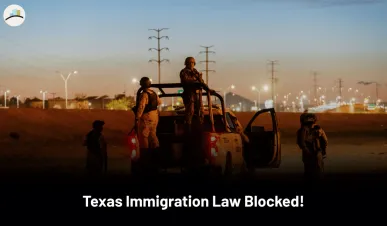
Texas Can't Enforce Its Immigration Law — Here's Why That Ruling Really Matters
So here’s what happened — on July 4, 2025, a federal court basically told Texas it can’t go ahead with a law it passed last year that would’ve allowed state police to arrest people for being in the country illegally. The law, known as SB4, was paused by a 2–1 decision from the U.S. Court of Appeals. It’s a big deal, not just legally, but politically too — and it says a lot about where we are right now with immigration policy in the U.S.
In a late-night ruling Thursday, the U.S. Fifth Circuit Court of Appeals continued to block Texas from enforcing a 2023 immigration law that would allow local police to arrest people they suspect crossed the Texas-Mexico border illegally. https://t.co/H36pZ8q1km
— Texas Tribune (@TexasTribune) July 4, 2025
Why Texas Passed This Law in the First Place
Texas leaders, especially Governor Greg Abbott and Attorney General Ken Paxton, have been very vocal about what they see as the federal government’s failure to handle the border. They argue that illegal immigration has gotten out of control, and if the federal government won’t act, the states should.
So SB4 was their way of doing something — letting Texas law enforcement arrest people they think crossed the border illegally and even letting state judges order those people to leave the country. That’s normally a federal job, but Texas was trying to take matters into its own hands.
Why the Court Said No (At Least for Now)
The court ruling said immigration enforcement is still the responsibility of the federal government — not individual states. That’s been the rule for a long time. And if Texas were allowed to go ahead, it would open the door for all kinds of state-by-state immigration laws, which could get messy fast.
Two of the judges — one appointed by President Bush and one by President Biden — agreed on this. They felt letting Texas move forward would cross a line the Constitution doesn’t allow. But the third judge, appointed by President Trump, didn’t agree. He basically said, look, if the federal government isn’t doing its job, shouldn’t the states be able to step in?
So it’s not a unanimous decision — and that’s part of what makes this interesting.
What Most Headlines Didn’t Say
One big thing that doesn’t get talked about enough is what this law would’ve meant for local police. Imagine being a police officer and having to figure out who’s undocumented and who isn’t — without the right training or federal resources. That’s risky. It could lead to racial profiling, wrongful arrests, and just a general breakdown of trust between police and communities.
Also, the financial side of things matters too. Setting up your own immigration enforcement system is expensive — building jails, hiring more officers, expanding court staff. And the truth is, Texas already spends billions on border security through Operation Lone Star. SB4 would’ve added a lot more cost to that without any clear return.
What This Means for SpaceX and the Military
Politically, this decision isn’t going to end the debate. In fact, it’s probably just the beginning. Texas leaders have already said they’ll appeal, which means this could go all the way to the U.S. Supreme Court. If it does, the outcome could affect not just Texas, but other states trying to pass similar laws.
It also means immigration is going to stay front and center heading into the 2026 elections. Republicans will keep arguing that states need the power to protect themselves. Democrats will likely say the Constitution keeps immigration under federal control for a reason. Either way, this issue isn’t going anywhere.
Bigger Risks No One’s Really Talking About
Here’s the thing — if states start making their own immigration laws, we could end up with totally different rules across the country. What’s allowed in Texas might be illegal in California. That kind of patchwork system would be a nightmare for migrants, local governments, businesses, and even courts.
And that’s not just theory. Think about how this would affect industries that rely on immigrant labor — like farming, construction, and food service. Confusing or harsh laws could make workers stay away, which would hurt local economies that depend on them.
Also, there’s a diplomatic side. Countries like Mexico are watching. They may not like the idea of individual U.S. states trying to enforce immigration rules on their citizens. It could cause problems in trade or border cooperation if not handled carefully.
MORE ARTICLES :
What Comes Next
-
Texas will likely appeal this to the Supreme Court.
-
Other states might either pause their plans or try their own versions, depending on how this case plays out.
-
Immigration advocates will push for stronger federal reform — because honestly, these state-level fights are happening partly because there’s still no clear national solution.
Final Thought
This court ruling didn’t just block a law — it reopened the whole conversation about who gets to decide what happens at America’s borders. And while the Constitution says that’s a federal job, more and more states are pushing back, saying they won’t wait for Washington to act.
So now we’re left asking a bigger question: What kind of immigration system do we really want — and who should be in charge of it?
This case isn’t just about law. It’s about identity, control, and how much trust we place in different parts of government to protect people while respecting their rights. And that’s a conversation that’s only going to grow louder from here.



