
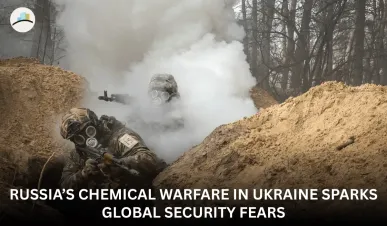
When Dutch Defence Minister Kajsa Ollongren stood before reporters and warned that Russia’s use of chemical weapons in Ukraine is now “widespread,” it wasn’t just another grim headline in a war already full of horrors. It was a sobering moment – a reminder that the red lines we thought the world wouldn’t cross are, in fact, being erased.
This isn’t just about Ukraine anymore. It’s about the future of warfare, the fragility of global treaties, and a creeping danger to economies, businesses, and societies that may not even realize they’re in the blast zone.
Why would Moscow go this far?
At first glance, Russia’s alleged use of chemical agents might look like desperation — a sign of an army struggling to gain ground in eastern Ukraine. But look closer, and the strategy is chillingly calculated.
Chemical attacks, even small-scale ones, can sow terror far beyond the frontlines. They contaminate soil, poison water, and make once-thriving farmland uninhabitable. For a country like Ukraine — Europe’s breadbasket — that’s not just a humanitarian disaster. It’s an economic one with ripple effects that could hit global food prices.
And there’s another layer: psychology. These weapons instill fear not just in soldiers but in civilians thinking about returning home. A single chlorine cloud can turn an entire town into a ghost city overnight.
Trump just stopped supplying air defense to Ukraine which helps Russia kill civilians.
— Langlauf Fella 🇺🇦 (@sikloernyo) July 4, 2025
Trump’s weakness also enables chemical warfare against Ukraine…
Such a shame USA’s influence is waning…https://t.co/0kYJcbnj84
The risks no one’s talking about
Most headlines stop at “war crime” or “breach of international law.” But there’s a deeper, quieter threat here:
-
Global norms are unraveling. For decades, the Chemical Weapons Convention kept these horrors in the shadows. If Russia can flout it with little consequence, what’s stopping others from following?
-
NATO’s credibility is on the line. The alliance has drawn red lines before — in Syria, in Crimea. Each time, the world watched to see if it would act. What happens if those lines keep getting crossed without real consequences?
-
The environmental time bomb. Beyond the immediate casualties, these chemicals linger in soil and water for years. Fields that once fed millions could become toxic wastelands.
Why businesses and markets should care
If you think this is only a military problem, think again.
-
Grain exports could collapse. Ukraine supplies nearly 10% of global wheat. If its farmlands are contaminated, expect another shockwave in food prices.
-
Energy markets may get shakier. Fresh sanctions on Russia’s chemical plants or a NATO escalation could send oil and gas prices surging.
-
Chemical industries face scrutiny. Western firms exporting dual-use chemicals to third countries may soon find regulators breathing down their necks.
This isn’t just about geopolitics. It’s about supply chains, investments, and the hidden fragility of our interconnected world.
Why this moment feels different
We’ve been here before, haven’t we? Saddam Hussein’s gas attacks in the 1980s. Assad’s chlorine bombs in Syria. Each time, the world vowed “never again.” Each time, it happened again.
But this is different. Today, satellites and smartphones broadcast these horrors in near real-time. Yet, paradoxically, that constant exposure risks numbing us to their enormity.
The question isn’t just whether the West will respond. It’s whether we’ll even notice when chemical warfare becomes the new normal.
More Articles:
This matters because…
Once a taboo weapon is normalized, it rarely stays contained. Today it’s Ukraine. Tomorrow, it could be anywhere. For governments, investors, and citizens alike, ignoring this escalation is no longer an option.



