
What Happened?
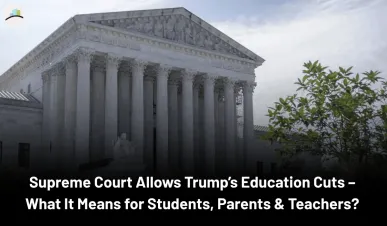
On July 14, the U.S. Supreme Court quietly gave the green light for former President Trump’s team to go ahead with a big plan to lay off a large number of people from the U.S. Department of Education. Around 1,300 to 1,400 employees could now lose their jobs, including many who work in important areas like student loans, civil rights protections, and special education. Earlier this year, a lower court had blocked the move, saying it would do too much damage. But now, the Supreme Court has stepped in and allowed it — without much explanation. And yeah, it’s a pretty big deal.
The layoffs started a few months ago when Trump’s Education Secretary Linda McMahon began cutting staff in line with his long-time goal of shrinking (or maybe even shutting down) the Department. Several state attorneys, civil rights groups, and unions tried to stop it legally. They said students, especially from poor and minority backgrounds, would be hurt the most. But now, the block is gone, and the Trump team can move forward.
🚨 BREAKING: SUPREME COURT SIDES WITH TRUMP — gives green light to continue MASSIVE purge at the Department of Education
— Nick Sortor (@nicksortor) July 14, 2025
Nearly 1.4K employees will now be laid off, with more DRASTIC cuts on the way.
MASSIVE LOSS for left wing activists — HUGE WIN for children! 🔥
End DoE! pic.twitter.com/GxxIJOSOYA
Why It Feels Bigger Than Just Layoffs
Okay, so on paper it sounds like it’s just a staffing issue, right? But honestly, this is way more than that. Cutting half the staff at the Education Department means we’re going to lose people who actually help manage the country’s school funding, student loans, and protect students from discrimination.
Here’s why that matters:
-
The Office for Civil Rights is losing over 50% of its team. That office helps fight racism, ableism, sexual harassment, and more in schools. Cutting it down makes it harder for students to get justice.
-
Student loans — worth more than $1.6 trillion — are being moved to the Treasury or Small Business Administration. That could cause delays or errors. Honestly, who wants their loan forgiveness or interest calculations messed up?
-
Important school data — stuff like dropout rates, test scores, and funding reports — could stop being collected or shared. That makes it harder to know what’s working in education and what’s not.
MORE ARTICLES:
What’s Not Getting Talked About Enough
Most of the news is just saying “Trump gets to lay off staff,” but not many are talking about what it means long-term. One big thing is how other government agencies are being forced to take over tasks they’re not built for. Like, DOJ handling school civil rights complaints? Treasury dealing with your FAFSA? That’s not really their thing, and it could lead to mistakes, delays, or even total breakdowns.
Also, nobody’s really asking what happens to smaller or poorer states. Richer states might create their own education programs, but the rest could fall behind badly. That means more inequality, especially in rural or low-income areas.
Could This Open the Door for More Big Changes?
Yeah, possibly. This might just be the beginning. If this goes through without a strong pushback, future presidents might try the same thing with other departments. Don’t like an agency? Just cut half the jobs and shift the rest somewhere else. It might not technically “close” the agency, but it sure weakens it.
Even though the Education Department was created by Congress back in 1979 to make sure all students get fair access to good schooling, this move could completely change that. And unless Congress steps in (which doesn’t look likely right now), the Department could basically become an empty shell.
So, What’s Next?
-
The legal fight isn’t over yet. Lower courts will still hear challenges from states and education groups.
-
Congress might try to stop or limit these changes, but let’s be real — it’s going to be tough without bipartisan support.
-
Students and schools may start seeing real impacts by fall — especially when trying to apply for financial aid or report discrimination.
And if this all seems rushed and confusing, you’re not alone. Even the justices who disagreed with the ruling said it gives the president way too much power to undo entire federal programs just by firing staff. That’s kind of scary when you think about it.
Final Thoughts
This isn’t just some Washington politics story. It’s something that could impact real students, real teachers, and real families. Whether you’re dealing with student loans, trying to get help for a child with learning needs, or hoping for fair treatment in school — these changes matter. And with so many responsibilities now bouncing between government departments, things could get messy. It’s worth paying attention to.



