
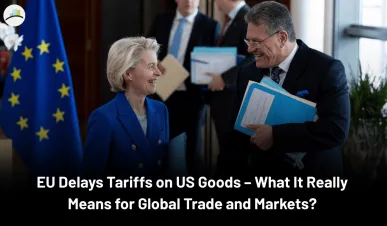
The EU Hits Pause — But It's a Strategic Move
So, the EU was all set to hit back at the U.S. with a bunch of tariffs—on billions worth of goods—but at the last moment, they decided to wait until August. Now, some folks might take this as the EU backing down, but honestly, it’s more of a careful step than a retreat. They're not trying to start a full-blown trade war unless it becomes absolutely necessary. This pause feels more like a warning that says, “We’re ready to go if you push us—but let’s talk first.”
What’s really happening here is the EU is giving diplomacy one last shot. They’re hoping to avoid a messy fight while also showing they won’t stay quiet if the U.S. pushes too far.
The EU is delaying retaliatory tariffs on U.S. goods, in hopes of reaching a deal by Aug. 1 https://t.co/mlGfXSlzdR
— BNN Bloomberg (@BNNBloomberg) July 13, 2025
This Is About More Than Just Trade
Let’s be real—this isn’t only about taxes on steel or wine or whatever else is on the list. This delay shows something deeper: the relationship between the U.S. and EU is under serious pressure. Trust is shaky, and both sides are trying to figure out how to deal with each other in this new, unpredictable environment.
On top of that, European leaders are also thinking about their businesses, their supply chains, and their upcoming elections. Nobody wants a headline-grabbing tariff battle right before they face their voters or try to manage already fragile economies. So the delay isn’t weakness—it’s smart timing.
What Most People Aren’t Talking About
Here’s where it gets interesting—there’s stuff going on behind the scenes that isn’t making it to the front pages.
1. Businesses need time to breathe
Companies across Europe—especially in industries like autos and manufacturing—are scrambling to figure out what these tariffs would mean. This delay gives them a little room to plan, adjust contracts, or even reroute supply chains. They’re not off the hook, but at least they’re not getting hit overnight.
2. It sends a message to other allies
By not reacting too fast, the EU is also showing other U.S. allies that it’s possible to stand firm without blowing things up. It’s kind of a new way to handle pressure: be patient, stay calm, and still hold your ground.
3. The euro and markets are watching
Financial markets care less about the actual tariffs and more about the uncertainty. The longer this drags out, the more nervous investors get. And if confidence dips, the euro could drop, and that has a ripple effect way beyond Europe.
MORE ARTICLES:
Risks If This Drags On, But Also Some Hope
Here’s what could go wrong:
-
If the talks break down, the EU might launch bigger tariffs, and that could lead to an ugly back-and-forth.
-
Some EU countries are already fed up and might push for a tougher response—France in particular isn’t in the mood to wait much longer.
-
American businesses, especially in agriculture and industrial sectors, might feel the pinch fast, and pressure could land back on the White House.
But there’s also a chance here:
-
If both sides calm down and find a middle path, they could actually reset some trade rules that haven’t worked in years.
-
The EU is already signing new trade deals with Asian countries like Indonesia. That’s a smart way to reduce reliance on the U.S., and it could open up new paths for business and jobs across Europe.
Feels Like Déjà Vu, But the Game Has Changed
This whole thing reminds a lot of people of trade fights we’ve seen in the past—like the U.S.–Japan issues in the 1980s or the Airbus-Boeing drama. But this time, the vibe is different. Back then, even when things got tense, there was trust. Now? Not so much. There’s a growing feeling that international deals aren’t about fairness anymore—they’re about who has more leverage.
And that’s what makes this standoff even more important. The EU isn’t just worried about tariffs—they’re trying to figure out how to deal with a U.S. that keeps changing its tone every few years. That’s tough to plan around.
What Happens Next?
With August getting closer, here’s what you should keep an eye on:
-
Any updates from Trump’s team or EU leaders—especially anything that sounds like compromise or, on the other side, warnings.
-
Big business groups (like auto and agriculture) will probably get louder if they feel things are headed toward a cliff.
-
Market reactions—if stocks or currencies start reacting badly, it might push both sides to calm things down quicker.
Final Thoughts
This delay isn’t a retreat—it’s a smart move by the EU to see if cooler heads can win out. But it also sends a message: they’re not afraid to fight if they have to. What’s at stake here isn’t just one trade deal. It’s about how the world’s major powers handle their differences in an era where every decision has global consequences. The next few weeks could quietly shape the future of how the U.S. and EU do business—and whether diplomacy still has a real place in international trade.



