
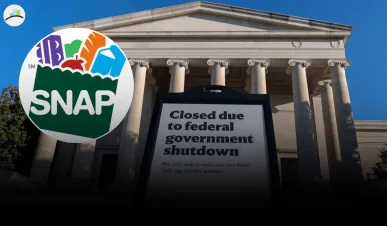
The Government Shutdown on SNAP Benefits: A Critical Analysis
The ongoing U.S. government shutdown has set the stage for a looming crisis affecting millions of American families. Among the most pressing concerns is the potential disruption of the Supplemental Nutrition Assistance Program (SNAP), which serves as a lifeline for nearly 40 million Americans. While the immediate focus has been on the political wrangling in Washington, the far-reaching consequences of a SNAP benefit cut may have a lasting impact that goes beyond just food insecurity.
This is what happens when power sits unchecked across all branches of government. When the White House, DOJ, and FBI are aligned under the same political interests, accountability disappears.
— R. Smith (@chubby2600) October 18, 2025
According to recent reporting, internal FBI documents indicated a recorded sting… pic.twitter.com/UPXo9AiNbK
MORE ARTICLES:
Why Is This Happening?
The government shutdown, now in its fourth week, is the result of a standoff between the U.S. Congress and the executive branch over budgetary allocations and policy differences. SNAP, being a federal program, is directly affected by such a stalemate. Despite its importance, food assistance programs are often among the first casualties in these budget battles.
The debate surrounding SNAP has grown increasingly polarized. While many lawmakers argue that the program needs reform or stricter work requirements, others see the cuts as an affront to the nation's most vulnerable. In Illinois, where 1.9 million people rely on SNAP benefits, local leaders have emphasized that the decision to delay or cut off benefits is not just a financial issue; it's a humanitarian one.
The underlying issue here is a fundamental disagreement on the role of government in supporting basic needs for citizens. As part of broader fiscal policy debates, SNAP benefits have become an easy target for politicians looking to reduce spending, even though the program provides critical support for families navigating poverty, food insecurity, and economic instability.
What Is Not Being Discussed Enough?
While the political drama in Washington grabs the headlines, the broader social and economic ramifications are not receiving the attention they deserve. For one, the disruption of SNAP benefits could trigger a cascade of challenges for local economies. With less disposable income, families who depend on SNAP will likely cut back on spending in other areas, which could lead to a decrease in consumer demand. Small businesses, particularly those in lower-income neighborhoods, could feel the brunt of this reduction in purchasing power.
Additionally, food banks, which already operate under strained conditions, are ill-equipped to handle the surge in demand that a shutdown could bring. With fewer resources and the looming threat of economic uncertainty, these community organizations could struggle to meet the needs of those left without government support. The hidden risk here is that these vital organizations may become overwhelmed, forcing many families into deeper economic distress.
One of the most alarming underreported aspects of the shutdown's effect on SNAP is the ripple effect it will have on public health. Many people who rely on SNAP are also recipients of other essential services, such as healthcare and housing assistance. A lack of food security often correlates with poor health outcomes, especially among children and the elderly. This means that food insecurity today could lead to higher medical costs tomorrow, putting further strain on the already overburdened healthcare system.
Potential Economic and Political Implications
The economic consequences of a disrupted SNAP program are multifaceted. Beyond the direct impact on families, the food assistance program is an integral part of the U.S. agricultural sector. Farmers, particularly those who supply produce, dairy, and meats to low-income communities, could see a drop in demand for their products. With many grocery stores in lower-income areas depending on SNAP clients, the collapse of this program could destabilize regional food supply chains.
On the political front, the government shutdown has already heightened tensions between the White House and Congress. If the deadlock extends into November, lawmakers could face an electoral backlash from the 40 million Americans who depend on SNAP, as well as their families and communities. In the 2024 elections, this could become a pivotal issue, particularly in swing states where the working class forms a crucial voting bloc.
Moreover, the shutdown could undermine the credibility of the federal government in managing its most basic functions, fueling cynicism among the public about the efficacy of their elected representatives. This could contribute to long-term instability in the political climate, making future negotiations even more challenging.
A Historical Parallel: The 2013 Government Shutdown
Historically, the 2013 government shutdown offers a cautionary tale. At that time, the Temporary Assistance for Needy Families (TANF) and other social programs were also impacted, leading to a temporary reduction in support for families in need. The political fallout from that shutdown, especially in terms of the impact on public trust in government, was significant. Similarly, the ongoing 2023-2024 shutdown threatens to erode trust in the political establishment, especially in a climate already fraught with divisions over social programs.
What Are the Hidden Risks and Opportunities?
There are hidden risks that have not been widely discussed. For one, the shutdown could push more people into the informal economy, where they may seek alternative, often unreliable sources of income or food. This could further destabilize families, making them more vulnerable to exploitation. On a broader scale, this could lead to a rise in income inequality and foster a divide between urban and rural areas, as rural communities are typically more dependent on federal assistance programs.
However, there are also opportunities. The ongoing crisis could serve as a rallying point for reform-minded policymakers and activists who seek to address long-standing inefficiencies and inequities within the U.S. food assistance system. The shutdown may ultimately spark conversations about strengthening the safety net, potentially leading to more sustainable, long-term solutions to food insecurity.
Conclusion
The current government shutdown is more than just a political standoff; it is a critical turning point that could reshape the landscape of U.S. social welfare programs for years to come. The potential disruption of SNAP benefits is a stark reminder of the fragility of the country's safety nets and the precariousness of millions of American families. If policymakers do not act swiftly, the economic and social fallout could extend far beyond the immediate consequences of the shutdown, leaving lasting scars on communities and the national economy.
For now, the focus should be on finding solutions that protect the most vulnerable while addressing the underlying political dynamics that threaten to undermine these essential services. Only time will tell if the current crisis will lead to meaningful reforms or if the cycle of political dysfunction will continue, further eroding trust in government institutions and social programs.



