
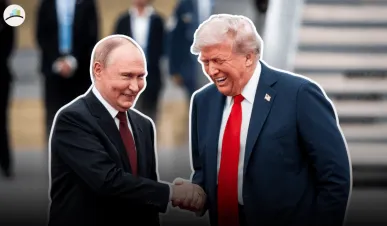
The geopolitical tug-of-war between Russia and the West has reached a critical juncture. The ongoing Ukraine conflict, heavily shaped by President Vladimir Putin’s actions, has drawn sharp attention to the U.S. and European responses. But as the media fixates on military aid and political alliances, deeper questions lurk beneath the surface: What is Putin’s long-term strategy? How do these developments affect the global economy? And more importantly, what are the hidden risks and opportunities for the West that are not being discussed enough?
Trump is Putin's Bitch. pic.twitter.com/VQA35NwDEI
— Astraia Intel 🎖️ 🇺🇦🇺🇸 (@astraiaintel) October 18, 2025
Key Events and Timeline of U.S.-Ukraine Relations and Putin's Involvement:
| Date | Event/Development | Key Players Involved | Implications |
|---|---|---|---|
| October 17, 2025 | Zelensky meets Trump in the White House requesting Tomahawk missiles for Ukraine. | Trump, Zelensky | Request highlights the growing military needs of Ukraine in the face of Russia's ongoing aggression. |
| October 17, 2025 | Trump expresses reluctance to provide military support, citing concerns over worsening relations with Russia. | Trump, Putin | Reflects Trump's careful diplomacy towards Russia amidst growing pressure for Ukraine's defense needs. |
| October 14, 2025 | Russia responds to U.S. requests for military aid, with Putin warning of consequences for increasing arms supplies to Ukraine. | Putin, Trump | Putin's stance continues to influence U.S. decision-making, especially in military matters. |
| Upcoming | Trump and Putin are scheduled for a summit in Budapest to discuss broader peace terms for Ukraine. | Trump, Putin | The summit is an attempt to negotiate a ceasefire but poses risks if territorial demands from Russia are accepted. |
| October 2025 (Ongoing) | Russia's strategic control over energy and agricultural exports remains central to Ukraine's economy. | Putin, European Energy Suppliers, Ukraine | Putin’s leverage over global energy markets is a hidden risk to European economies, which are reliant on Russian energy. |
MORE ARTICLES:
A Fresh Angle: What Is Not Being Discussed Enough?
While much of the discourse surrounding U.S.-Ukraine relations centers on military aid and the potential for a direct confrontation with Russia, there are quieter but far more insidious implications at play. The growing economic repercussions, especially in energy and trade, are largely overlooked.
Consider the Russian energy leverage. Despite Western sanctions, Russia remains a dominant player in the global energy market, particularly in Europe. Putin’s strategic use of energy exports as a political weapon has profound implications for global energy prices. The uncertainty surrounding Russia’s role in Europe’s energy mix is a wildcard, capable of rattling international markets.
Economic and Political Implications of Putin’s Actions:
| Issue | Details | Implication |
|---|---|---|
| Energy Leverage | Putin continues to control significant energy exports, especially to Europe. | European reliance on Russian energy could leave the EU vulnerable to Russian political pressure, escalating economic instability. |
| Agricultural Exports | Russia’s control over vital Ukrainian grain ports could affect global food security, with ripple effects across the Middle East and Africa. | Disruptions in global food supply chains could exacerbate hunger crises, increasing geopolitical tensions. |
| Sanctions Impact | Western sanctions have not fully isolated Russia, and Russia continues to deepen trade relations with China. | The West’s sanctions are less effective as Russia diversifies its economic partnerships, diluting their impact. |
| Multipolar World Dynamics | Putin’s efforts to build alliances with emerging economies are reshaping global governance structures. | The shift away from a U.S.-dominated world order introduces new geopolitical and economic complexities for the West. |
Putin’s Diplomatic Strategy: The Hidden Risks for the West
Beyond military and economic considerations, the ideological battle is an aspect that has not been fully explored. Putin is not merely seeking territorial gains; he is engaged in a long-term campaign to redefine global governance. His actions reflect a broader challenge to the liberal democratic order, one that has been the cornerstone of U.S. foreign policy since the end of the Cold War.
Putin’s efforts to reshape international norms are particularly evident in his outreach to countries in Africa, Latin America, and the Middle East, where Russia is rapidly increasing its diplomatic footprint. This is not only a tactical move for short-term gains but a deliberate attempt to create a multipolar world that dilutes Western influence. Putin’s engagement in these regions is a calculated step in counteracting the global dominance of the U.S. and its allies, thus increasing the complexity of Western diplomacy.
Potential Hidden Risks and Opportunities for the West:
| Hidden Risk | Details | Hidden Opportunity |
|---|---|---|
| Energy Market Instability | Ongoing reliance on Russian energy exports could lead to long-term instability in global energy prices. | Accelerating the transition to renewable energy sources could reduce dependency on Russia. |
| Economic Isolation of Russia | Russia is increasingly turning to non-Western economies (China, India), bypassing Western sanctions. | The West has an opportunity to invest in technology, energy independence, and digital currencies to offset Russia's growing partnerships. |
| Geopolitical Fragmentation | Putin’s strategic diplomacy in Africa and the Middle East undermines the Western-dominated order. | Strengthening global alliances outside of Europe and expanding partnerships with emerging economies can rebalance geopolitical dynamics. |
Conclusion: A Turning Point for Global Governance
Putin’s actions, both in Ukraine and on the global stage, have created a seismic shift in international relations. As the U.S. faces growing domestic pressure and international scrutiny, the path forward will require delicate balancing. The stakes are not only about Ukraine’s future but about the global order itself. The West must adapt to an increasingly multipolar world and understand that the risks and opportunities presented by Putin’s policies are not just about military conflict—they are about reshaping global governance in a rapidly changing geopolitical environment.
The question remains: Will the West find the unity and resolve to navigate these challenges, or will Putin’s influence continue to reshape the global landscape? Only time will tell.



