
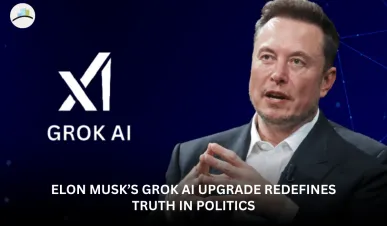
Elon Musk is once again making headlines, but this time it’s not for rockets, EVs, or brain chips. Instead, it’s about Grok, his X-branded artificial intelligence chatbot, which he claims now serves “facts over feelings” on divisive topics like Hollywood and politics.
On the surface, it seems like just another AI upgrade. But the real story lies in the intersection of AI, media narratives, and Musk’s growing influence on political discourse. This is more than a chatbot. It’s a cultural weapon—carefully positioned to challenge what Musk and his followers view as mainstream media bias, liberal Hollywood elitism, and the “woke” agenda.
Why Did This Happen? Timing, Influence, and Control
The timing is no accident. Musk has been increasingly vocal in positioning himself as a cultural counterweight to traditional elites. The upgrade to Grok comes just as AI is being scrutinized for how it curates information and reinforces ideological bubbles.
By building an AI that claims to prioritize “truth” over “feelings,” Musk taps into a specific demographic: anti-establishment, free speech absolutists who distrust Silicon Valley, legacy media, and government institutions.
It's also a strategic branding move for X (formerly Twitter), which has seen user engagement plateau and advertiser interest wane. Grok 2.0 gives Musk a new hook: a personalized content engine that feeds users narratives they feel are being silenced elsewhere.
MORE ARTICLES :
What’s Not Being Discussed Enough: Algorithmic Bias as a Political Tool
Musk criticizes OpenAI and Google’s models for being too "woke" or “censored,” but what’s less examined is how Grok’s “facts-first” model is shaped by its own set of implicit biases, designed by Musk’s hand-picked teams.
The core issue isn’t about truth vs. feelings—it’s about who defines what counts as a fact. In an AI system, the framing of a question, the training data selected, and the ideological bent of its creators all influence what users experience as “truth.”
“AI models don’t exist in a vacuum,” says Dr. Sophie Chen, an ethics researcher at MIT. “They reflect the values, priorities, and blind spots of those who build them. Grok is no exception.”
Economic & Business Implications: AI as a Subscription Driver
Grok is tightly integrated into X’s premium offerings, which are now central to the company’s monetization strategy. With fewer advertisers on the platform, Musk is betting on subscription-based models.
This positions Grok as a content differentiator, similar to how Netflix or Spotify use exclusive shows or playlists to drive loyalty. But unlike a TV show, Grok is a live, reactive tool—one that could amplify controversial opinions, increase polarization, and drive virality... all under the guise of objectivity.
Opportunity: If Musk can successfully create a perception that Grok is "unfiltered truth" while competitors are seen as censored or corporate, he may attract a loyal base of paying users willing to trust an AI over traditional news outlets.
Cultural Fallout: AI Is the New Media Outlet
This moment echoes the rise of cable news in the 1990s or YouTube influencers in the 2010s. Once again, a new format is redefining how truth is packaged and sold—but this time, it’s being done through algorithms rather than anchors.
Hidden Risk: If Grok becomes a primary news source for a portion of the electorate—especially younger voters—it could fragment public discourse even further, replacing journalistic standards with AI-driven tribal validation.
Why This Matters
AI isn’t just reshaping technology—it’s now reshaping trust. Grok 2.0 isn’t just a chatbot; it’s Musk’s attempt to rewrite the information economy on his terms. With the lines between entertainment, opinion, and fact increasingly blurred, Grok might not just reflect public opinion—it could start setting it.
This isn’t just about smarter chatbots. It’s about who controls the narrative in an era where code speaks louder than headlines.



