
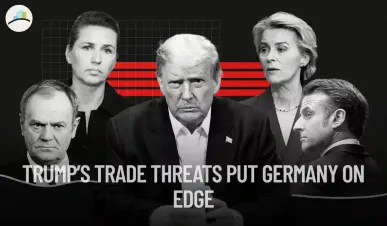
Trump’s Tariff Moves Could Hit Germany Hard
So, Donald Trump is back in action with his usual tough stance on trade, and honestly, Germany is kind of stuck in a tight spot. He’s bringing back those big tariffs again — this time, even more aggressively — and it’s putting serious pressure on German industries, especially cars and steel.
Germany’s economy has been shaky already, and now the threat of 50% tariffs on exports to the US could make things worse. Automakers like Mercedes-Benz, who sold billions worth of cars in the US last year, are now planning to shift some production to the US just to avoid the hit. And it’s not just cars. Trump also raised steel and aluminum tariffs, which isn’t great news for the country’s industrial base.
New German Chancellor Faces Old Worries
Friedrich Merz, Germany’s new chancellor, is heading to the White House for the first time — but he’s walking into a storm. Not only is he dealing with Trump’s aggressive trade rules, but he’s also up against a public that’s really starting to lose hope.
People aren’t just worried about the economy. There’s frustration about everything — the rising unemployment, how industries are shrinking, and how far-right groups like the AfD are gaining ground. It’s like a perfect storm, and Merz is right in the middle of it.
German Industry Struggles to Adapt
Let’s take a real example — Karsten Vogt runs a family business in Duisburg that’s been around since the 1930s. His company makes fire-resistant doors for energy plants. But now, as the world shifts to cleaner tech, his business is fading. And he’s not keen on starting over. He’s been through too much change already and says, “That’s enough.”
That kind of fatigue isn’t just about one business — it’s everywhere. Big steel companies like ThyssenKrupp are cutting jobs. Germany is losing thousands of industrial jobs each month. The whole region around Duisburg is showing signs of decline, and people are clearly feeling it.
Also read on Procapitas
Duisburg Shows What’s at Stake
Duisburg used to be a steel giant. Now it’s struggling with high unemployment and rising support for extremist parties. It’s the kind of place that shows just how much Germany needs a win — fast.
While there’s some hope in logistics and shipping (Duisburg has the biggest inland port in the world), it’s not enough to replace all the lost jobs. Business owners in the area feel uneasy. One even said that Trump’s tariff changes destroyed years of trust “in just a few days.” That’s how fragile things are.
Germany’s Crossroads
Chancellor Merz is pushing big reforms — massive spending on infrastructure and defense — and even wants to cut back welfare to push people into facing what he calls “real” challenges. He’s made it clear: Germany can’t survive with a four-day workweek and a comfy lifestyle.
But the far-right AfD is saying something totally different. They’re offering to protect the old ways, shut out migrants, and even pull out of the EU. And, in some areas, they’re getting really close to Merz’s party in the polls.
Germany is at a turning point. The next few months could really shape whether it can hold on to its place as Europe’s economic engine — or if things will keep sliding.



