
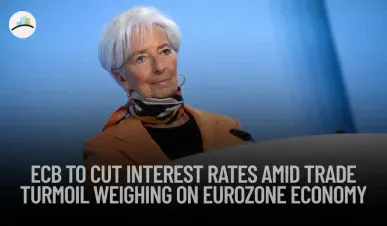
The European Central Bank (ECB) is set to reduce its deposit rate by 25 basis points to 2% in its upcoming policy meeting, marking the eighth rate cut in just over a year as the eurozone grapples with sluggish growth and ongoing trade disruptions.
ECB President Christine Lagarde is expected to provide forward guidance balancing the need to stimulate the economy while managing long-term inflation risks. The move aims to bolster economic activity amid weak indicators and global uncertainties, including escalating trade tensions that continue to weigh on growth prospects.
Economic Challenges Prompt ECB Action
Despite efforts to revive the eurozone economy, sluggish growth and inflation that remains above target have forced the ECB to maintain an accommodative stance. The decision to cut interest rates reflects concerns over trade disputes impacting exports and supply chains, which in turn dampen business investment and consumer confidence.
Recent data shows persistent softness in industrial production and consumer spending across key member states. The ECB’s monetary easing seeks to support credit availability and encourage borrowing to offset these headwinds.
Also Read:
Forward Guidance and Market Reaction
Market participants are closely watching for hints on the ECB’s future policy path. While some analysts predict the central bank will pause further cuts during the summer months to assess evolving conditions, others warn that continued trade uncertainties may necessitate additional stimulus.
The ECB’s communication will be crucial in shaping investor expectations, as the euro currency and bond markets remain sensitive to changes in monetary policy signals.
Global Context and Comparisons
The ECB’s rate cut contrasts with the more cautious approach taken by the U.S. Federal Reserve, which has maintained steady rates amid signs of stronger economic performance. This divergence highlights differing economic outlooks and challenges faced by the world’s major economies.
Trade tensions between major powers remain a key risk factor globally, influencing central banks’ decisions to either tighten or loosen monetary policy in the near term.
Source: Bloomberg
ECB to Cut Interest Rates as Trade Mess Weighs on Economy



