
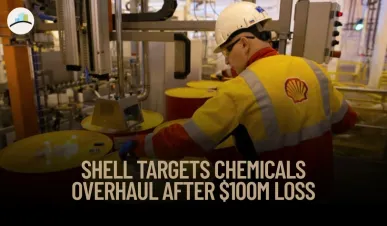
Shell CEO Wael Sawan has announced a determined push to resolve the persistent underperformance of the company’s chemicals division. In remarks following the energy giant’s latest earnings release, Sawan confirmed that the chemicals business is facing a strategic inflection point. It posted a net loss in fiscal 2024 and failed to meet internal return-on-capital expectations.
For one of the world’s largest integrated energy companies, this public recognition of a segment’s failure marks a significant pivot. Sawan’s tenure has been characterized by a focus on financial discipline and shareholder returns. That lens is now turning sharply on the chemicals business.
More Articles:
Chemicals Division Faces Scale Constraints and Capital Competition
Despite selling close to 12 million metric tons of products in 2024, Shell’s chemicals arm incurred a net loss of around US$100 million. These results have reinforced longstanding concerns that the unit lacks the scale, efficiency, and strategic synergy required to justify further capital investment.
The division has been squeezed by weak global demand, margin compression, and fierce internal competition for capital—especially against Shell’s higher-yielding liquefied natural gas (LNG) and upstream portfolios. Analysts note that in the race for capital allocation within Shell, the chemicals unit no longer makes a compelling case for reinvestment.
Strategic Refocus on LNG Growth and Shareholder Value Creation
Under Sawan’s leadership, Shell is doubling down on its LNG business. The company sees LNG as its clearest path to growth and profitability through the next decade, citing increasing global demand and pricing resilience. Shell forecasts mid-single-digit annual growth in LNG output, supported by infrastructure expansion and trading strength.
The shift aligns with the company’s revised strategy of delivering consistent shareholder value through dividends and buybacks. In that context, non-core or underperforming businesses—like standalone chemicals—are at risk of being restructured, scaled down, or exited.
This emphasis on financial return over industrial integration marks a departure from Shell’s previous attempts to maintain a fully integrated downstream and chemicals value chain.
Shell's CEO pledges to turn around the company’s struggling chemicals business https://t.co/pZ1dlBEtbx
— Bloomberg (@business) July 31, 2025
Procapitas Insight — Shell Signals a Leaner, More Focused Future
The chemicals unit’s drag on profitability has become a liability to Shell’s long-term growth story. Wael Sawan’s acknowledgment of this underperformance is more than operational housekeeping—it represents a signal of deeper transformation.
Shell’s future appears to rest on fewer, higher-return pillars: LNG, oil trading, and select upstream assets. As such, businesses that fail to deliver scalable returns or fit within the core LNG and energy trading narrative are under review.
A gradual exit from chemicals—especially in regions where operations lack scale or pricing power—could free up billions in capital. That capital can then be reinvested in growth corridors such as LNG terminals, clean energy transition platforms, and global supply chain enhancements.
For investors, this is a positive sign that Shell is prioritizing economic returns and operational focus over historical legacy or vertical integration. Execution will be key, but the messaging from the top is clear: Shell’s capital will now go where it delivers the highest yield.
Disclaimer:
This article is intended for informational purposes only and does not constitute investment advice. Procapitas does not provide personalized financial recommendations. Always consult a licensed financial advisor before making investment decisions. Information is based on publicly available sources as of June 2025 and Procapitas’ independent research and analysis.



