
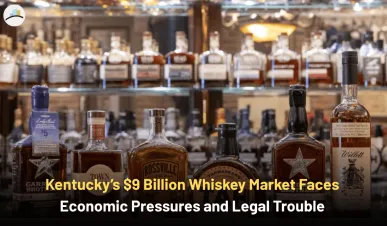
Kentucky Whiskey Industry Begins to Crack Under Pressure
A wave of bankruptcies has hit Kentucky’s iconic whiskey industry, sending shockwaves through the $9 billion sector. Distilleries once booming during the post-pandemic surge are now filing for protection as debt piles up and demand slows down. Names like Kentucky Owl and Garrard County Distilling have gone under, while even major brands are reporting weak sales, paused expansions, and declining profit margins.
This shift marks a dramatic reversal for an industry that, until recently, was riding high on global hype, domestic tourism, and premium branding.
BREAKING: Kentucky’s bourbon belt just got a sobering jolt: three distilleries have fallen into bankruptcy or receivership in only eight months, shaking confidence in a $9 billion signature industry that supports 23,000+ jobs and a $1.6 billion payroll. pic.twitter.com/bAYdigpRWX
— Data Driven Stocks (@stockdatamarket) August 4, 2025
Market Forces Driving the Collapse
The downturn is being driven by a perfect mix of bad timing, economic stress, and changing consumer behavior.
-
Distillers overproduced during the boom years, creating a massive surplus of aging barrels that no longer match demand.
-
Younger drinkers are leaning toward low-alcohol alternatives like hard seltzers, canned cocktails, and functional beverages — not traditional bourbon.
-
Global exports are down as trade tensions and import tariffs make it harder to ship whiskey abroad at scale.
What’s unfolding now is the fallout from aggressive growth without a clear read on evolving market trends.
Economic and Cultural Undercurrents Fueling the Downturn
Beyond what’s happening in boardrooms and supply chains, deeper cultural and economic patterns are shifting.
The whiskey world misread younger demographics. What used to be a safe bet — premium, aged bourbon — now struggles to resonate in an age of speed, shareability, and social media-driven preferences.
Add to that the global landscape: delays in trade deals, rising taxes on American whiskey overseas, and inflationary costs on materials are all squeezing profit margins.
This isn’t just a production issue — it’s a branding crisis too. Traditional whiskey no longer feels as modern or relevant in the way it did a decade ago.
MORE ARTICLES:
The Domino Effect on Jobs, Towns, and Local Economies
The financial damage is beginning to spill into everyday life across Kentucky. Distillery closures mean job losses in bottling, warehousing, shipping, tourism, and retail.
Communities that once thrived on bourbon trail traffic are seeing fewer visitors and canceled development plans. Local suppliers — from barrel makers to grain growers — are also starting to feel the pinch.
Even larger brands are freezing hiring, slashing budgets, and canceling marketing deals. For smaller labels that banked on investor funding or premium positioning, the road ahead looks even more uncertain.
Signs of Reinvention and the Industry’s Next Chapter
Some distillers aren’t giving up — they’re pivoting. Ready-to-drink formats, whiskey-based cocktails, and non-alcoholic spirit lines are gaining traction. Others are investing in digital experiences or building community-focused branding to stay relevant.
There’s also a growing push to diversify export markets, partner with international distributors, and lobby for better trade terms.
Still, these shifts will take time, and many producers may not survive long enough to benefit. The industry must balance tradition with innovation in order to stay alive.
Conclusion
Kentucky's whiskey collapse is more than a financial correction — it's a cultural and economic wake-up call. A sector built on legacy and long-term aging is now being tested by short-term trends and fast-changing consumer expectations.
Whether the industry adapts or fades depends on how quickly it can evolve — not just in what it makes, but in how it tells its story.
What’s coming next: Will trade policies ease the pressure? Can legacy brands connect with a new generation? Kentucky’s whiskey scene isn’t dead — but its survival now depends on transformation, not nostalgia.



