
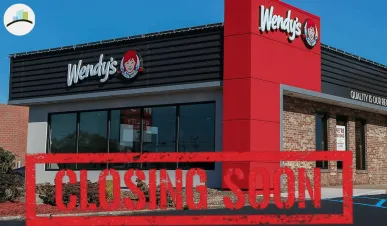
In a dramatic turn of events, Wendy’s, one of America’s largest fast-food chains, has announced that it will be closing hundreds of its restaurants across the United States. The company plans to shut down anywhere between 200 and 350 locations in the next year, as part of a strategic shift to improve its performance in a competitive fast-food landscape. While the news may be shocking for some, there’s much more behind this move than just the numbers. This decision comes as Wendy’s struggles with a 4.7% drop in same-store U.S. sales, and it reflects the company’s efforts to refocus on its long-term goals.
This news has left many people wondering why Wendy’s is making this move, and more importantly, what it means for their future. In this article, we’ll break down the key reasons behind Wendy’s decision to close these restaurants, and explore how this will impact the brand’s future growth.
Why Is Wendy’s Closing So Many Restaurants?
Wendy’s has been facing some major challenges recently, with sales slipping and the fast-food market becoming increasingly competitive. But what exactly is driving these restaurant closures?
MORE ARTICLES:
Declining Sales & Market Challenges
The biggest factor behind these closures is the company’s declining same-store sales. Over the past year, Wendy’s experienced a 4.7% drop in U.S. same-store sales, which is a significant decline for a company of this size. The company faces stiff competition from its rivals, such as McDonald’s and Burger King, who continue to innovate and grow in a fast-changing market. As Wendy’s struggles to maintain its sales numbers, it’s forced to confront the reality that some of its locations are simply not profitable enough to keep open.
Underperforming Locations
Not all of Wendy’s restaurants are performing at the same level. While some locations thrive, others continue to struggle with lower foot traffic and sales. According to Ken Cook, the interim CEO of Wendy’s, the company is closing down “underperforming” locations, which consistently fail to meet sales targets. These stores, despite being part of Wendy’s overall footprint, have been a drain on the company’s resources. By closing them, Wendy’s aims to reduce operational costs and refocus on higher-performing stores that have better potential for growth.
A Strategic Reset
This move is more than just about cutting losses—it’s part of a larger reset for the brand. Wendy’s has always been an innovator in the fast-food space, known for its square hamburgers and fresh, never frozen beef. But in order to keep up with competitors and grow in a crowded market, the company needs to prioritize its best-performing assets and put more effort into revitalizing the brand. Closing the underperforming stores will allow Wendy’s to invest in stronger locations, remodel existing stores, and focus on expanding into new, more profitable regions.
When Will the Closures Happen and Where?
The closures will take place over the next 12 to 18 months, starting late in 2025 and continuing into 2026. The exact locations of the closures have not been publicly announced, but they will likely impact underperforming stores in cities where Wendy’s has struggled to gain a foothold.
While the closures may seem like a loss, they are part of a broader effort to improve profitability in the long run. As Wendy’s narrows its focus to the more successful units, it will have more resources to reinvest in remodeling and upgrading stores that are doing well, as well as creating new menu items like their popular chicken tenders ("Tendys").
What Does This Mean for Wendy’s and Its Future?
Wendy’s is not just closing down stores; it’s reassessing and restructuring its business to ensure that it’s ready for the future. Here’s what we can expect from the brand moving forward:
Focus on Innovation and Menu Expansion
One of the biggest reasons behind Wendy’s success has always been its ability to innovate. With the closures, the company plans to reinvest in stronger locations and new product lines. Wendy’s recently introduced their new chicken tenders, and they’re likely to focus more on creating fresh, exciting menu options that will attract customers. This innovation will allow Wendy’s to stay competitive and continue offering a unique experience to customers.
A Better Customer Experience
While the closure of underperforming stores might be disappointing for some customers, it will ultimately benefit Wendy’s loyal fanbase. The focus will shift towards improving the quality of service and enhancing the customer experience at existing locations. This includes upgrading store interiors, improving digital ordering experiences, and expanding drive-thru options—something many fast-food chains are focusing on due to the growing demand for convenience.
Maintaining Market Leadership
Wendy’s has always been known for its fresh, high-quality food, and the company plans to maintain its leadership in the industry by ensuring that its remaining stores uphold these standards. By reducing the number of low-performing locations, Wendy’s will be able to strengthen its brand image and stay at the forefront of the fast-food sector.
Potential Global Expansion
Although the closures are happening in the U.S., Wendy’s is still focused on expanding globally. With a focus on profitability and brand strength in key markets, the company may look to introduce new international locations as it continues to grow outside of the United States.
What Will Happen to the Employees?
As with any business restructuring, employees at the closing locations will be impacted. However, Wendy’s has stated that it will do its best to support the workers at these locations. While some may lose their jobs, others could be offered the opportunity to transfer to new or upgraded stores. Wendy’s will also provide severance packages and help employees find new roles within the company or elsewhere.



