
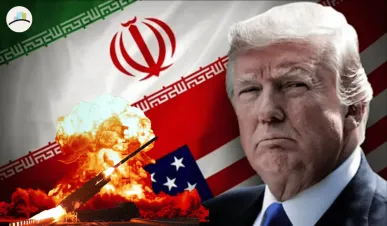
US President Donald Trump issued a strong warning to Iran, saying that any attempt to stop the flow of oil through the Strait of Hormuz would result in a response “20 times harder” than the previous actions taken. The threat comes amid escalating tensions in the region between the US, Israel, and Iran, following a series of military clashes and political standoffs.
Trump's remarks were made during public statements and shared on social media, where he reinforced the importance of the Strait of Hormuz for global oil trade. The Strait is one of the world’s most important maritime chokepoints, with about 20% of global oil trade passing through it.
— The White House (@WhiteHouse) March 10, 2026
Timeline: Key Events Leading to Trump’s Warning
January 2026 – Initial Escalations
-
Tensions between the US, Israel, and Iran rise after a series of military strikes in the Middle East. Iran begins threatening retaliation for what it sees as Western interference.
-
Oil prices start to see slight increases as uncertainty grows regarding the safety of shipping lanes through the Strait of Hormuz.
Late February 2026 – Shipping Disruptions
-
Several tankers and commercial vessels avoid passing through the Strait of Hormuz due to rising safety concerns amid increased military activity.
-
Maritime insurers raise premiums, reflecting the growing risks in the region.
-
Oil prices surge as traders react to the uncertainty, marking a significant spike above $100 per barrel.
Early March 2026 – Military Tensions Escalate
-
Iran's Revolutionary Guard and Iranian-backed militias conduct missile and drone strikes near vital infrastructure in the Gulf, including military sites and oil facilities.
-
The US military retaliates with targeted airstrikes on Iranian proxy installations.
-
Global attention turns toward the potential for a direct confrontation, with oil markets on edge.
March 9, 2026 – Iran Threatens to Block Oil Shipments
-
Iranian officials warn that they might block oil shipments through the Strait of Hormuz in retaliation for continued US-Israel strikes.
-
Oil traders react with further price hikes, fearing sustained disruptions to global energy supplies.
March 10, 2026 – Trump’s Stark Warning
-
President Trump delivers a strong message, warning Iran that any attempt to halt the flow of oil through the Strait would result in a response “20 times harder.”
-
He emphasizes that the US will not allow disruption to global energy markets and will take decisive action to protect shipping routes.
-
Trump’s words signal a sharp escalation in US policy toward Iran and could lead to more direct military action.
March 10–12, 2026 – Oil Market Reaction
-
Oil prices shoot up to $119 per barrel at one point as markets react to the heightened conflict and uncertainty surrounding the Strait of Hormuz.
-
While prices ease slightly, concerns remain that any further escalation could disrupt supply lines and send prices higher.
-
China, Japan, and European nations that heavily rely on oil imports from the region begin preparing for potential supply chain disruptions.
Why the Strait of Hormuz Matters
The Strait of Hormuz connects the Persian Gulf to the Gulf of Oman and serves as a crucial artery for global oil trade. Every day, millions of barrels of oil pass through, making it an economic lifeline for oil-importing countries. A blockage or threat in this region can cause spikes in oil prices and lead to global economic instability, as seen in previous geopolitical crises.
MORE ARTICLES:
Global Impact and Future Concerns
Trump’s warning, combined with escalating military actions, has sent shockwaves through both the global oil markets and international diplomacy. The key concerns include:
-
Energy Security: Countries like India, China, and Japan, which rely on oil from the Gulf, are monitoring the situation closely, with the potential for higher oil prices impacting their economies.
-
Regional Stability: The conflict between Iran and the US-Israel coalition has the potential to escalate into a broader regional war, with significant consequences for countries in the Middle East.
-
Global Oil Prices: As the conflict intensifies, oil prices could see dramatic increases, impacting everything from transportation costs to consumer goods.
What’s Next?
As tensions continue to rise, all eyes are on Iran’s next move and how the US will follow through with Trump’s warning. The coming days and weeks will be crucial in determining whether the situation can be de-escalated or if it will lead to a full-blown confrontation that could further disrupt oil markets and regional stability.



