
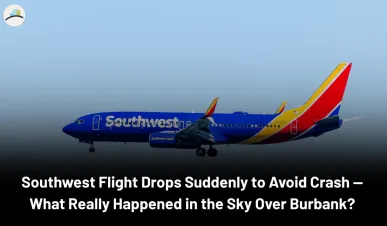
A Southwest Airlines plane headed to Las Vegas had to dive suddenly to avoid hitting a small plane near Burbank Airport in California. The two aircraft got way too close — just about 100 feet apart in the air. It could’ve gone very, very wrong. The Federal Aviation Administration (FAA) and the National Transportation Safety Board (NTSB) are now looking into it.
Let’s break down what happened, why it’s such a big deal, and what no one’s really talking about yet.
Minutes after takeoff from Burbank’s airport in Los Angeles, a Southwest flight violently dropped hundreds of feet, as the pilot tried to avoid a midair collision with a military plane – injuring two flight attendants. @TrevorLAult has details. https://t.co/goW9A6JOt0 pic.twitter.com/v3YDEKMgzm
— World News Tonight (@ABCWorldNews) July 25, 2025
What Went Down — Literally
The flight, Southwest 2483, was on its final approach into Burbank when something unexpected happened. A small Cessna plane, which was also cleared to land, ended up right in the Southwest jet’s path. The air traffic controller told the Southwest crew to descend fast and turn — and they did. The jet took a sharp dip, avoiding what could’ve been a deadly mid-air crash.
Reports say the planes were just 100 feet apart vertically, and less than 2,000 feet side by side. That's incredibly close, especially when you're flying at high speed.
Why This Isn’t Just Another “Scary But Safe” Story
Honestly, we’ve heard of close calls before. But this one felt different. These near-misses are starting to happen more often — and it’s not just bad luck. There’s something bigger going on here. Air traffic control towers are overworked and understaffed. Some of the systems they use are kind of outdated. Smaller airports like Burbank handle both commercial planes and little training aircraft — and that makes things a lot more complicated.
And let’s be real — when your entire flight depends on one person in a control tower not missing a beat, that’s a lot of pressure on human beings.
MORE ARTICLES:
What People on the Plane Experienced
Some passengers said they felt the plane suddenly drop. You know that sinking feeling when your stomach jumps during turbulence? It was like that, but more intense. People grabbed their seats, some trays flew open. No one was physically hurt, thankfully. But it shook people up. One person even said it felt like the plane dropped out of nowhere.
This wasn’t your usual bumpy landing. It was a fast, sharp move to save lives.
What No One’s Really Talking About
Here’s the thing most people don’t realize: situations like this aren’t just about quick pilot decisions. They reveal bigger cracks in how air travel works in the U.S. right now.
-
Air traffic controllers are stretched thin, especially at busy airports like Burbank.
-
There's a rise in private flights and small aircraft activity after the pandemic — which means crowded skies.
-
The systems that help planes talk to each other or avoid each other? Not always as modern or as connected as you'd expect.
So while the pilots handled it like pros, they were put in a bad position by a system that needs fixing.
What Happens Next?
The FAA and NTSB are doing a full investigation. They'll check radar data, listen to the audio from air traffic control, and talk to the pilots. It’ll take time. But hopefully, it leads to some changes — maybe better systems, more staff, and clearer rules when runways change last-minute.
Because if this keeps happening, it’s only a matter of time before one of these near misses becomes a real disaster.
Final Thought
This story could’ve ended a lot worse. Thankfully, it didn’t. But let’s not shrug it off just because everyone landed safely. We’ve got more planes in the sky than ever before, and the systems that are supposed to manage them are under a lot of pressure. If we don’t pay attention now, the next time might not be a close call — it might be something far worse.



