
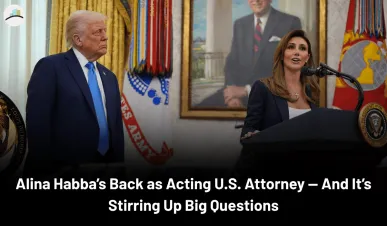
Alina Habba, who was once Donald Trump’s personal attorney, is now back as the acting U.S. Attorney in New Jersey. What’s unusual is that federal judges in the state actually picked someone else for the job, Desiree Grace, after Habba’s 120-day temporary term ended. But then the Justice Department—under Trump’s hand-picked Attorney General Pam Bondi—fired Grace and put Habba back in charge through a technical move that’s legal but honestly pretty controversial.
Some folks are calling this smart legal strategy. Others say it’s just another way Trump is putting his loyal people in places of power—especially in roles that could affect his political rivals.
Alina Habba to remain N.J. prosecutor: "I don't cower to pressure" https://t.co/yo60Dz0rXc
— Axios (@axios) July 25, 2025
Why This Feels Bigger Than Just One Job Switch
Okay, so this isn’t just about who’s holding a legal office in New Jersey. The way this happened says a lot about how power is being used—and honestly, it’s not sitting right with a lot of people. Usually, when a temporary U.S. Attorney’s term runs out, judges get to appoint someone to fill in until the Senate confirms a permanent replacement. That’s exactly what happened here… but it didn’t last long.
After Grace was appointed by the court, the Justice Department removed her within hours. Then they made Habba a deputy in the same office, which legally lets her be acting U.S. Attorney again for another 210 days. It sounds complicated, but it basically lets the administration skip Senate approval and ignore the judges’ pick. That’s what’s making people nervous—because it kind of breaks the usual checks and balances.
Is This Just About Loyalty?
Let’s be real—Habba isn’t a traditional prosecutor. She’s known more for defending Trump in civil cases, not leading criminal investigations. During her short time as U.S. Attorney earlier this year, she was already investigating some big-name Democrats in New Jersey. That included Newark’s Mayor Ras Baraka and Rep. LaMonica McIver. Both cases got dropped later, but people noticed. So now that she’s back in that same role, there’s a lot of worry that her job might be more political than legal.
It’s fair to wonder—if someone that close to Trump is in charge of federal prosecutions in a state like New Jersey, will the investigations stay neutral? And what happens if this move becomes a trend across the country?
MORE ARTICLES:
What the Courts and Senate Think
Here’s another layer to all this. Both U.S. Senators from New Jersey—Cory Booker and Andy Kim—refused to support Habba’s nomination earlier. Usually, that kind of opposition would block someone from getting the job permanently. So instead of pushing the nomination through the Senate and risking a public fight, the administration just used this workaround.
Now, legal experts are saying this could spark a big court battle. Some say it might even violate parts of the Vacancies Reform Act. Others argue it’s technically allowed, but not what the law was meant for. Either way, it’s clear the executive branch is pushing boundaries—and the courts may not take it lightly.
What This Could Mean Going Forward
This might not seem like a huge story to everyone, but it has serious consequences. Here’s why:
-
It chips away at the role of the courts in keeping legal power in check.
-
It shows how the Senate’s advice-and-consent role can be dodged.
-
It raises trust issues—can people really believe prosecutors will act fairly if they’re seen as political appointees?
Also, if this tactic works in New Jersey, what’s stopping it from happening in other states? We could start seeing more acting appointments with no real oversight, especially in places where federal investigations touch on elections, civil rights, or public corruption.
Final Thought
At the end of the day, this is about more than just one person or one office. It’s about how much power a president can use to reshape the justice system. Alina Habba’s appointment might stick for now—but there’s a growing debate about what this kind of move does to the justice system, and whether it's setting a risky precedent for the future.



