
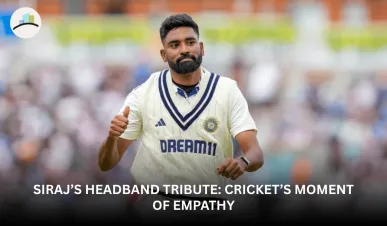
When Respect Becomes a Symbol—Cricket's Most Unexpected Moment
During Day 2 of the fifth Test at The Oval, India’s fiery pacer Mohammed Siraj donned a special white headband marked “GT”—a tribute to Graham Thorpe, whose legacy was being honored on what would have been his 56th birthday. The gesture, humble yet powerful, resonated as a rare moment of cross-border empathy on a fiercely competitive stage.
But beyond the sentiment, Siraj’s act carried larger weight: it highlighted the emotional maturity of modern athletes and hinted at evolving relationships between nations on the field.
Why This Matters: More Than Just a Marketing Moment
-
Empathy Over Rivalry
In a landscape where sports gestures are choreographed, Siraj’s tribute was spontaneous, authentic, and unaffected—a silent message that sportsmanship and respect can transcend national allegiances. -
Mental Health Awareness Takes Center Stage
The tribute coincided with a broader fundraising effort for mental health charity Mind. The gesture amplified awareness on a day dedicated to Thorpe’s unabashed struggle. Siraj’s empathy elevated the tribute beyond tradition into a dialogue about athlete well-being. -
Impact on Team Dynamics
Siraj, India’s strike spearhead, delivered a breakthrough spell immediately after. The headband became more than symbolic—it marked a moment where reverence and performance merged.
What Isn’t Being Talked About Enough
-
International Solidarity in Sport
While fans and English players wore the headbands, few appreciated how rare it is for an opposing team’s player to publicly honor a rival legend. This could mark a new chapter in cricket diplomacy. -
Emotional Intelligence as a Competitive Edge
A player who exemplifies awareness of deeper narratives may unite teammates in ways that raw skill cannot. This gesture may serve as a textbook example for how off-field empathy fuels on-field cohesion. -
Legacy Beyond Stats
Thorpe’s cricketing genius is well-remembered—but his later mental health struggles aren’t. Siraj’s act helped reconnect Thorpe’s legacy with his humanity, not just his statistics.
Historical Parallels: When Moments Became Movements
In football, Paolo Di Stefano wore boots in memory of Diego Maradona—an emotional tribute that rippled worldwide. Siraj’s headband could become cricket’s equivalent: a moment where a sporting gesture initiates awareness, fundraising, and emotional reckoning.
MORE ARTICLES:
Risks & Opportunities: Beyond the Applause
| Risk | Opportunity |
|---|---|
| Tribute flights overshadow crucial cricket context—performance pressure | Artwork of sport and empathy can inspire sponsorships aligned with mental wellness |
| Misunderstanding gesture as PR gimmick | Open the door for athlete-led mental health initiatives tied to charity fundraising |
Fresh Story Angles to Explore
-
Could Siraj’s gesture lead to formal mental health collaborations between cricket boards and charities?
-
Will upcoming athletes follow suit—turning emotional gestures into performance catalysts?
-
Can this shift how broadcasters cover Test cricket—balancing stats with personal narratives?



