
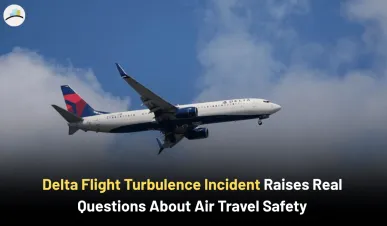
A Mid-Air Scare That Was Way More Than Just Bumpy Skies
So here's what happened. A Delta flight going from Salt Lake City to Amsterdam hit really bad turbulence just 40 minutes into the journey. It got so bad that the plane had to make an emergency landing in Minneapolis. Reports say 25 people ended up in the hospital. That’s not a small number—and it wasn’t just passengers. Several crew members got hurt too. From what passengers shared, things turned terrifying very quickly. People were literally thrown out of their seats, carts went flying, and there was panic in the cabin.
This wasn’t during takeoff or landing—it happened mid-flight, right when you expect everything to be calm. And that’s what makes it so alarming. It wasn’t just rough weather. It was something no one seemed ready for, not even the crew. It was the kind of turbulence that hits without much warning, which, let’s be honest, feels like a growing trend lately.
🚨🇺🇸 Delta Flight makes an Emergency Landing as 25 people are seriously injured due to extreme turbulence
— Concerned Citizen (@BGatesIsaPyscho) July 31, 2025
There are lots of Legacy Media reports now blaming increased turbulence everywhere on ‘Climate Change’
Of course this is nonsense - something else is happening in our… pic.twitter.com/45XuiTV8IL
The Business Side Airlines Can’t Ignore
Let’s look at what this kind of thing really costs an airline like Delta. First, there’s the obvious—emergency landings, medical attention, flight delays. But that’s just the surface. When something like this happens, it shakes people’s trust. You’ve got passengers scared to fly, reputations at risk, and huge questions about what went wrong. That means legal trouble, insurance complications, and a lot of money going out fast.
And here’s the thing—turbulence-related injuries already cost U.S. airlines hundreds of millions every year. This is only expected to go up as flights get longer and climate conditions more unpredictable. And all of that might start reflecting in how tickets are priced or how airlines schedule flights. So even if you weren’t on this flight, this kind of thing could still affect the rest of us down the line.
The Bigger Issue Behind the Sudden Turbulence
This kind of turbulence is what experts call “clear-air turbulence.” Basically, it shows up without any warning signs like storm clouds or weather radar blips. It’s hard to see coming, and that’s what makes it so dangerous. Pilots don’t have much time to react, and passengers often aren’t buckled up when it hits.
What’s scary is that this type of turbulence is becoming more common, and most scientists believe it’s tied to climate change. Jet streams are shifting, temperatures are rising, and all of that messes with air patterns. So yeah, flying is technically still safe—but incidents like this are getting harder to predict, and that’s a problem that isn’t getting enough attention.
MORE ARTICLES:
Safety for Cabin Crew Needs a Real Update
We usually hear about passengers getting injured, but in this case, several flight attendants were sent to the hospital too. That says a lot. Flight crew members are moving around the cabin most of the time, especially during meal service, and if turbulence hits during that window, they’re the most at risk.
There’s a conversation we need to have about how airlines protect their staff. Maybe it's time to rethink how and when meals are served. Maybe crew members need different kinds of gear or better warning systems. Whatever the solution, it's clear that crews are on the front lines of this issue, and right now, they don’t have enough support.
It’s Time to Rethink What “Safe Flight” Really Means
The Delta turbulence scare wasn’t just a freak event. It’s part of a pattern we’re starting to see more often. And while no one wants to talk about it too loudly, the reality is, the skies are changing. Climate is messing with air travel in ways we didn’t really prepare for. The rules and tools we’re using are still stuck in the past, and that’s risky.
What this all comes down to is this—air travel is still one of the safest ways to get around, but that doesn’t mean we shouldn’t be asking harder questions. About how we fly, how we prepare for weather, how we train crews, and how much we invest in newer tech that can see these things coming. Because next time, we might not be so lucky.



