
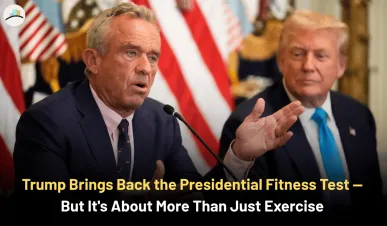
More Than Just Kids Doing Push-Ups
So, Trump just brought back the old-school Presidential Fitness Test — yeah, the one a lot of us remember from back in the day. Running laps, doing sit-ups, chin-ups — the whole thing. It’s being promoted as a way to get kids active again, which honestly doesn’t sound like a bad idea on the surface. But there’s more to it than just gym class.
This move kind of fits with Trump’s usual style — going back to things that feel like “how America used to be.” The original test started way back in the 1950s, during the Cold War. It was about making sure American kids were strong and ready — not just physically, but kind of symbolically too. Bringing it back now feels like it’s more about sending a message than just helping kids stay fit.
🇺🇸 Trump Just Revived the Presidential Fitness Test
— Jake (@JakeCan72) July 31, 2025
Push-ups. Pull-ups. 1-mile runs.
Screens down. Sweat up.
Soft culture? Over.
💡 Why This Is a Cultural Game-Changer:
• A return to performance-based excellence, ditching Obama-era “wellness” programs that prioritized… pic.twitter.com/aDisKeZ8Zf
Schools Are Already Struggling
Let’s be real — schools today have a lot on their plate. Between catching up after COVID, dealing with mental health issues, budget cuts, teacher shortages… it’s a lot. Adding another big national test, even for gym class, could just be more pressure.
Most schools don’t have enough funding for updated equipment or even regular P.E. time. And now they’re expected to roll out a national fitness program? It sounds good on paper, but it might hit poorer schools the hardest. Plus, there’s a chance it turns into another one of those programs where kids get judged based on numbers, rather than progress or effort.
This Feels More Like Politics Than Policy
Honestly, this fitness test feels less like a health move and more like a political message. Trump’s made it clear he thinks the country’s gotten soft — that we need to be tougher, stronger, more disciplined. This test fits right into that theme.
The timing’s interesting too. There’s been a lot of talk lately about military readiness, global competition, and bringing back “American strength.” A nationwide test focused on physical toughness in kids? It’s not hard to see how this plays into that bigger picture — especially when you consider it replaced the Obama-era version, which was more about overall wellness and personal growth.
MORE ARTICLES:
Not Everyone Can or Should Be Judged the Same Way
One big issue here is that not all kids are built the same. Some have health conditions, disabilities, or just different strengths. A standardized fitness test can make them feel like they’re failing, even if they’re trying their best.
And it’s not just about ability. Some kids don’t have safe places to play outside. Others might not get enough healthy food at home. If we don’t look at the bigger picture — like food access, community health, mental wellness — then this whole thing risks becoming more harmful than helpful. It could create more stress and anxiety, especially for kids already struggling.
This Could Have Been a Chance for Real Change
Here’s the thing — if this new fitness push had included more than just sit-ups and mile runs, it might’ve actually helped. Imagine if we had a program that taught kids about nutrition, sleep, mental health, managing stress — the stuff that actually builds healthy habits for life.
But instead, we’re bringing back an old test with no updates, no clear plan for how it’ll help long term, and no word yet on how it’ll work in schools that are already under pressure. It feels rushed and a little out of touch with what kids really need today.
This Isn’t Just About Gym Class Anymore
This fitness test might seem small, but it says a lot about where the country is headed. It’s not just about health. It’s about values — who we think is “strong,” what we reward, and how we treat kids who don’t fit the mold. If we’re not careful, this could end up being more about appearances than impact.
We all want kids to be healthy. But it’s got to be about more than just passing a test. Otherwise, we’re just checking boxes and calling it progress.



