
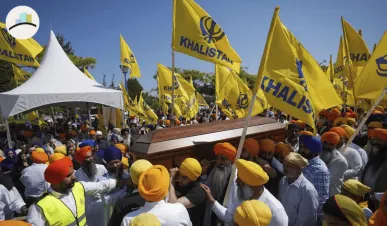
The world is watching as a chilling new chapter unfolds in the ongoing saga between India and Canada. A separatist group, Sikhs for Justice (SFJ), has issued a threat to "siege" the Indian Consulate in Vancouver. This follows the high-profile killing of Hardeep Singh Nijjar, a vocal advocate of the Khalistani movement, under mysterious circumstances. SFJ’s threat, accompanied by a provocative poster targeting India's newly appointed envoy to Canada, has raised alarm bells in diplomatic circles and among international security experts.
Why is this important?
At first glance, this might seem like a typical protest. However, this isn’t just a radical group flexing its muscles—it’s a seismic shift that could rock the very foundation of India-Canada relations. The escalation of the Khalistani movement, both within Canada and internationally, signals a larger threat to global peace and security. The actions of SFJ and the murder of Nijjar are a dire warning about the growing influence of diaspora extremism and its potential to destabilize entire nations.
The threat to the Indian Consulate is not an isolated act—it is part of a broader geopolitical battle between India and separatist groups operating within Canada’s borders. If the situation is not handled carefully, this could lead to a full-blown diplomatic crisis. But what’s the real motive behind SFJ’s drastic actions? And more importantly, what could this mean for the future of international relations, trade, and security?
MORE ARTICLES:
What’s really at stake here?
While headlines focus on the violence and the immediate threat, the long-term consequences of this incident are not yet fully realized. The diplomatic tension between Canada and India could deepen, potentially impacting critical areas such as trade agreements, counterterrorism cooperation, and regional security. But beyond the political ramifications, there are much darker forces at play.
-
Rising Extremism in Diaspora Communities: SFJ’s ability to mobilize its supporters across borders is a growing concern. Their threats against Indian officials are not just symbolic; they are a powerful reminder that diaspora communities can have a significant impact on global politics. The rise of radical elements within Canada’s Sikh community could set a precedent for other separatist groups in different regions, challenging the very fabric of diplomatic engagement between nations. Could other separatist movements across the world start adopting similar tactics?
-
The Growing Threat of Terrorism: This isn't just about a protest—it’s about pushing a violent agenda. The SFJ's escalating rhetoric and actions are increasing the risk of terrorism, not only in Canada but across the global stage. A siege of the Indian Consulate would serve as a massive blow to international peace efforts, especially in a post-9/11 world that has seen increasing attempts to regulate international diplomacy and mitigate the spread of radical ideologies. This could be the spark that ignites wider, more dangerous acts of violence.
What’s not being discussed enough?
The elephant in the room is Canada’s stance on radical groups like SFJ. While Canada prides itself on being a multicultural haven, the increasing radicalization within certain diaspora communities has raised questions about the limits of freedom of expression and the responsibility of the Canadian government to safeguard its relationships with foreign powers.
Canada’s growing blind spot: Canadian authorities have long allowed groups like SFJ to operate, often under the guise of political expression, but this leniency is now being tested. SFJ's growing influence could have long-term consequences, not only for Canada’s national security but also for the relationship with India, one of the world’s largest and most influential nations. The question that remains unanswered is whether Canada will tighten its policies on foreign-based radical movements or continue to allow such groups to push the limits of acceptable protest.
How India will react: India is unlikely to back down from these provocations. Expect an escalation in diplomatic pressure from New Delhi, demanding that Canada take stronger actions against groups like SFJ. This could result in a broader diplomatic standoff, with India potentially leveraging its significant economic and political clout. If Canada fails to take swift action, it risks alienating one of its most important allies in Asia, not to mention jeopardizing trade ties and cooperation in counterterrorism efforts.
Hidden risks and opportunities:
Risks:
-
The Diplomatic Fallout: If SFJ’s threats are realized, it could escalate to an unprecedented diplomatic crisis. India may demand greater control over the activities of radical groups in Canada, and failure to meet this demand could result in long-term damage to Canada’s relations with India. Imagine this: A breakdown in diplomatic channels could stall trade agreements and security cooperation, directly impacting millions of jobs and business interests on both sides of the border.
-
Security Risks for Diplomats: If SFJ’s threats are carried out, there could be widespread violence, not just in Vancouver, but across Canada. The safety of diplomats, Indian nationals, and innocent civilians could be at risk. A siege of the Indian Consulate would trigger massive security operations, potentially disrupting daily life in Vancouver, and setting off a chain reaction of political instability.
Opportunities:
-
Strengthened Global Alliances: If India pushes the global community to take action against SFJ, there could be a strong alignment with Western nations that also face the threat of domestic extremism. This could lead to new counterterrorism frameworks that bolster international cooperation and help protect sovereign interests against such radical elements.
-
Canada’s Opportunity to Lead on Counterterrorism: Canada is at a crossroads. The way it handles this crisis could define its future stance on diaspora extremism. By taking a firm stance against radical groups like SFJ, Canada could bolster its image as a leader in international security and counterterrorism efforts, potentially influencing how other nations approach similar threats.
Economic and Political Implications:
The economic implications of escalating tensions are profound. India and Canada have strong trade ties, with India being one of Canada's fastest-growing trading partners. A breakdown in diplomatic relations could hurt both nations economically, particularly in sectors like technology, agriculture, and energy.
Furthermore, the international business community will be watching closely. Investors dislike uncertainty, and an escalation in political instability could undermine investor confidence, impacting everything from stock markets to bilateral trade investments.
On the political front, Canada will be under immense pressure to respond decisively. The country’s reputation as a sanctuary for refugees and a promoter of peace could be called into question, forcing Canadian politicians to balance national security concerns with their commitment to multiculturalism.
Historical Parallels:
This situation is reminiscent of other instances where diaspora radicalism has had a profound impact on international relations. The rise of Tamil Tiger support networks in Western countries during the Sri Lankan Civil War, for instance, played a key role in shaping the diplomatic and security policies of countries like Canada and the UK. Similarly, the Khalistani movement’s impact on Indo-Canadian relations has been brewing for decades, and Nijjar’s killing marks a potentially dangerous turning point in this long-standing issue.
What’s Next?
The world is watching to see how Canada and India respond. Will Canada tighten its policies on radical groups, or will it continue to tolerate organizations like SFJ under the banner of freedom of expression? India’s response is likely to be aggressive, putting pressure on Canada to act swiftly or face diplomatic isolation.
This incident could mark a watershed moment in how countries across the world respond to the growing threat of diaspora extremism. If mishandled, it could spiral into a much larger crisis. But it could also serve as an opportunity for global cooperation against extremism—if both India and Canada are able to find common ground. The next few weeks could determine the future of not only India-Canada relations but the broader geopolitical dynamics of the diaspora’s influence on global politics.



