
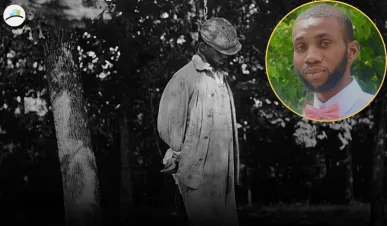
Mystery Unfolds in Mississippi: Was It a Tragic Accident or Something Darker?
What could lead to the tragic death of a promising young student found hanging from a tree on a college campus? That’s the question many are asking after the discovery of 21-year-old Trey Reed’s body near Delta State University in Cleveland, Mississippi, on September 15, 2025.
‼️BREAKING: WHITE MAN Found HANGING FROM TREE Just One Day After Black College Student Discovered Hanged On Mississippi College Campus – Officials Quick To Rule "No Foul Play" For The Black Teen But Why No Rush To Call "No Foul Play" For This Adult White Male??
— i Expose Racists & Pedos (@SeeRacists) September 16, 2025
📍Vicksburg,… pic.twitter.com/8RECrrcN9c
The unsettling nature of this incident has sparked outrage, with some demanding answers and others questioning whether it was an isolated tragedy or something far more sinister. While officials say there’s no evidence of foul play, the shockwaves of Reed’s death have rippled through both the local and online communities.
What Happened to Trey Reed?
On that fateful morning, campus staff discovered Trey Reed’s lifeless body hanging near the university’s pickleball courts. Local authorities responded quickly, and an initial investigation ruled out any signs of a violent struggle or assault. With no broken bones or visible injuries, officials suggested that Reed’s death may have been a suicide, though the investigation remains ongoing.
-
Date of discovery: September 15, 2025
-
Location: Delta State University, Cleveland, Mississippi
-
Cause of death: Under investigation (no signs of foul play)
But while authorities are calling it a tragic loss, the community isn’t so sure. This was a bright student who, just days before his death, was looking forward to his future. So what happened?
The Dark Cloud of Controversy: Could It Be More Than Suicide?
As news of Trey’s death spread, the incident quickly became a topic of fierce debate. Many have questioned whether this was truly an isolated event. The phrase “Black people don’t lynch themselves” gained traction online, with many expressing deep skepticism about the official investigation. Social media exploded with theories, speculations, and demands for more transparency, especially given Mississippi’s painful history of racial violence and lynchings.
-
Outrage sparked: The phrase "Black people don’t lynch themselves" became a rallying cry across social media.
-
Public reaction: Online discussions have been flooded with calls for justice and more detailed answers.
This reaction is not entirely unexpected. In the wake of the Black Lives Matter movement and ongoing conversations about race in America, every such incident inevitably draws scrutiny and suspicion. Is this another tragic chapter in Mississippi's history, or is it truly just a devastating accident?
A Growing Push for Accountability
While local authorities have stated they don’t suspect foul play, Trey’s family and their legal team aren’t buying it. Renowned civil rights attorney Ben Crump has been retained to investigate the matter further, vowing to ensure transparency and accountability throughout the process.
-
Ben Crump’s involvement: The civil rights lawyer known for handling high-profile cases has taken on Trey Reed’s case, demanding further investigation.
-
Family’s demand: Trey’s family insists on an independent inquiry to uncover the truth.
The public outcry for a more thorough investigation has prompted U.S. Representative Bennie Thompson to call for an FBI inquiry, citing concerns over fairness and impartiality in the local investigation.
How This Affects Campus Life and the Broader Community
In the wake of Trey Reed’s tragic death, Delta State University has been rocked to its core. Classes were canceled, and the campus community was given time to grieve. The university even postponed its centennial celebrations, a symbolic gesture to honor the loss of a student whose life was just beginning.
This incident isn’t just a tragedy for one family — it has broader implications for students of color on campuses across the nation. Trey Reed’s death has brought attention to ongoing concerns about campus safety, the mental health of students, and the systemic issues still facing minority communities. The grief felt by his peers is compounded by the uncertainty of what really happened that morning.
-
Campus response: Classes canceled, centennial celebrations postponed.
-
Student safety concerns: Many are now questioning the safety of students of color on campus.
What’s Next?
While we await official updates from the investigation, it’s clear that Trey Reed’s death will not be easily forgotten. As the community demands answers, one thing is certain: this incident has reignited important conversations about race, justice, and accountability in America.
We can only hope that this tragedy leads to meaningful change — not only for Trey but for all students who deserve to feel safe, supported, and valued on their college campuses.
As the investigation continues, more answers will come. But for now, Trey Reed’s death is a stark reminder that even in 2025, some mysteries remain unresolved. Will we ever know the full truth? Time will tell. ⏳
Stay tuned as the story develops.



