
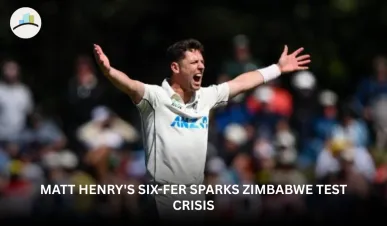
Matt Henry's Six-Fer Exposes Zimbabwe's Test Fragility – A Deeper Crisis Brewing?
Matt Henry didn’t just dismantle Zimbabwe in Bulawayo—he may have quietly exposed one of the most under-discussed truths in world cricket: Zimbabwe is falling behind, fast, and New Zealand’s bench strength is far more lethal than we thought.
Bowling Zimbabwe out for 149 in under two sessions wasn’t just dominance—it was a warning shot. For a team without several of its first-choice players, New Zealand looked anything but underprepared. Henry’s 6/39 wasn’t flashy—it was surgical. Relentless. And perhaps most importantly, predictable.
Why This Match Should Alarm Zimbabwean Cricket Authorities
This wasn’t just about a poor batting day. Zimbabwe came in with a team that lacked rhythm, intent, and depth. No batter crossed fifty. Most fell prey to soft dismissals. And the tail folded without resistance.
The bigger issue? This isn’t a one-off. Zimbabwe's top order continues to crumble under pressure. Their domestic circuit isn’t producing enough Test-ready players. Coaching systems haven’t evolved fast enough to keep pace with modern techniques, especially when facing quality pace attacks.
If this trend continues, Zimbabwe risks slipping further out of global contention—not just on rankings, but in relevance.
What New Zealand Quietly Achieved
Matt Henry led the assault, but this was a well-oiled machine. With key players rested, this was a stress-test for New Zealand’s second-tier bowlers. And they passed with distinction.
This match gave selectors clarity: Henry is not just a support act. He’s a frontline threat. And even without the Southee-Boult combo, New Zealand has a template for dominance—relentless accuracy, sharp seam movement, and consistent pressure.
More importantly, it proves New Zealand's Test cricket is no longer dependent on big names. The system works.
MORE ARTICLES:
Under-The-Radar Consequences
1. Zimbabwe’s Funding and Broadcast Value May Dip
Poor performances lead to less commercial interest. If matches become too one-sided, broadcasters and sponsors may start questioning ROI—especially for non-WTC fixtures.
2. Henry’s Test Career Trajectory Has Changed
This wasn’t just another five-wicket haul. With a depleted squad and in foreign conditions, Henry rose as a leader. Expect him to be at the forefront of NZ’s pace rotation for upcoming major series.
3. Increased Pressure on ICC Scheduling
One-sided games raise uncomfortable questions about Test cricket’s competitive balance. This might prompt ICC to reconsider future bilateral matchups and even funding support structures.
The Bigger Picture: Is Test Cricket Becoming Too One-Sided?
Henry’s domination underscores a broader worry: Test cricket might be losing its middle-tier competitiveness. Nations like Zimbabwe, Bangladesh, and even West Indies occasionally flash brilliance—but rarely sustain it. That’s a structural issue, not a talent one.
Without urgent investment in local infrastructure, coaching, and scheduling exposure, cricket’s elite may soon only be competing amongst themselves—making the format less global, and more exclusive.



