
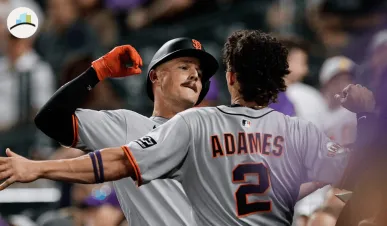
Matt Chapman Escapes Suspension – The MLB Drama That Could Change the Game Forever
In the latest twist in Major League Baseball's ongoing saga of player suspensions, San Francisco Giants' star Matt Chapman has successfully overturned a one-game suspension that had the potential to shake up his team’s momentum. But this isn’t just another player appealing a suspension—this case has all the drama, twists, and questions that could fundamentally change the way MLB handles player discipline.
Chapman’s victory over the suspension might seem like a simple win for the athlete—but the bigger story lies in the implications this appeal could have on the entire MLB disciplinary system. Is MLB really handling disciplinary matters fairly, or is this just a glimpse of how inconsistent and unreliable their system can be? With the Giants' star player now free to continue his role in one of the most competitive baseball seasons in years, the questions only pile up. How many other players will challenge suspensions moving forward? What does this mean for the league's credibility and business decisions in the future?
The Epic Victory: How Matt Chapman Beat the System
Let’s break this down. Initially, Chapman was handed a one-game suspension for a violation during a game, a ruling that seemed straightforward. But after a successful appeal, Chapman is walking away without any penalty, keeping his place on the field for his team.
Why does this matter? It’s not just because he got to avoid a game off—it’s because this outcome signals a flaw in the system. Are suspensions now too easily overturned? Or are they too harsh in the first place? One thing’s for sure: this successful appeal could change how players think about discipline in MLB.
And it’s not just about Chapman—this could be a game-changer for the entire sport. What happens next? Will this case create a domino effect, leading other players to challenge their suspensions with renewed hope? If suspensions are going to be overturned this easily, does it make the league’s disciplinary actions irrelevant?
MORE ARTICLES:
The Business of Baseball: Why This Matters for Teams and Fans
Here’s where it gets even more intense. Let’s talk about the business side of baseball. Matt Chapman isn’t just a star player—he’s an economic asset for the Giants. A one-game suspension would have cost the team in terms of viewership, ticket sales, and overall fan engagement. Teams depend on their star players to draw crowds, boost TV ratings, and, most importantly, make money. In a high-stakes season, any disruption in a player’s availability can hit hard.
Imagine if Chapman had missed that game. The Giants could’ve lost more than just his performance—they could have faced a drop in revenue, fans upset by his absence, and a serious loss of momentum for the team. His successful appeal means the Giants will remain competitive, and Chapman’s endorsement deals and fan popularity stay intact. In business terms, this is a huge win for the team—and for the MLB’s reputation.
The Hidden Risks: Could This Create a “Free-for-All” for Suspended Players?
Now, here’s where it gets seriously interesting—and a little concerning for MLB. What if more players start following in Chapman’s footsteps? What if the system is ripe for exploitation? Players might look at this case and think, “If Matt can win an appeal, why can’t I?”
Could this lead to an explosion of appeals, each case stretching MLB’s resources thin? If suspensions are challenged too easily, MLB could be left with a mess on its hands—one where they struggle to maintain control over player conduct.
It’s also a slippery slope: Could this undermine MLB’s credibility? If suspensions become viewed as arbitrary or easy to appeal, it could foster a culture of leniency, where players feel they can get away with violations because the system isn’t strong enough to hold them accountable. What happens when players start testing the boundaries of the league’s patience?
What’s Not Being Discussed: The Need for Reform in MLB’s Disciplinary System
You’ve probably heard plenty about how Matt Chapman got off scot-free, but what’s not being discussed enough is this: Does MLB’s disciplinary process need a major overhaul? Right now, the system seems to lack the kind of transparency and consistency that would make fans and players trust the process. If suspensions are overturned so easily, how can the public believe in the integrity of these decisions?
Furthermore, could this case expose a larger flaw in how MLB determines its disciplinary actions? Are the punishments often too harsh, or do they simply need to be reexamined with a more holistic approach that takes into account the player’s history and intent? Perhaps the issue is that MLB is too quick to hand out suspensions, leaving no room for fairness or individual cases to be considered.
The Bigger Picture: The Future of MLB Disciplinary Actions
Look ahead. Will Matt Chapman’s appeal be a turning point? Could we see the MLB implement new rules or technological systems to prevent another situation like this one? One thing is clear: the future of MLB disciplinary actions hinges on how the league chooses to react to this growing trend of successful appeals. Could instant replay or artificial intelligence be used to create more fair, consistent decisions in the future?
There’s an opportunity for the MLB to redefine the way it handles player behavior. If it can address these challenges head-on, the league could strengthen its public trust and player relationships. Alternatively, if they choose to ignore the cracks in the system, we could be witnessing a new era of controversy and uncertainty in professional sports.
Conclusion: Is This the Beginning of a New Era for MLB?
This is just the beginning. Matt Chapman may have won this battle, but the war over MLB’s disciplinary system is far from over. As the appeal system becomes more visible and challenging, the league is at a crossroads. What comes next could define how the MLB handles player conduct for years to come—and whether or not the integrity of the sport is at stake.
So, are we witnessing the dawn of a new era of player freedom, or will MLB put its foot down and restore order? Only time will tell, but one thing is for sure—this case is far from just a simple appeal. The future of MLB’s discipline hangs in the balance.



