
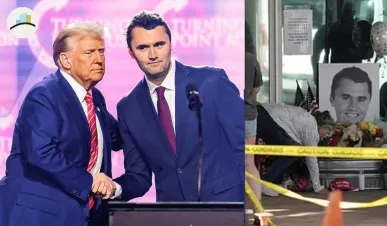
Will Trump Attend Charlie Kirk’s Funeral? Political Implications and Unanswered Questions
The tragic assassination of Charlie Kirk, the conservative firebrand and founder of Turning Point USA, has sent shockwaves through the political landscape. As the nation mourns the loss of a key figure in the conservative movement, one question looms large in the minds of many: Will Donald Trump, the former president, attend Kirk’s funeral? It’s not just a simple matter of ceremonial attendance—this event could carry significant political ramifications, shaping the future of the conservative movement and the relationship between Trump, the Kirk family, and the wider GOP base.
Why This Matters: The Symbolism of Trump’s Attendance
If Donald Trump does indeed attend Charlie Kirk’s funeral, it could have a profound impact on the political narrative surrounding both men. The conservative movement is at a critical juncture—Charlie Kirk was not just a political commentator; he was an embodiment of a new wave of conservative youth activism that resonated with millions. Trump's presence would signal a unification of forces within the conservative establishment, showcasing a direct line from Kirk’s work to Trump’s broader vision for the GOP.
In contrast, if Trump does not attend, the decision will be loaded with implications—politically, socially, and culturally. It may raise questions about Trump’s relationships with the broader conservative base and the Turning Point USA movement. After all, Kirk and Trump shared a strong alliance: Trump praised Kirk’s work in galvanizing young voters, and Kirk often publicly aligned with Trump’s policies and political philosophy. A non-attendance would open the door for speculation about the underlying dynamics between the two and their respective roles in the future of conservative politics.
MORE ARTICLES:
The Unspoken: How Will Trump's Absence or Presence Affect the GOP?
While much of the discussion focuses on the personal angle of Trump attending a funeral, the deeper political consequences remain underexplored. Trump has long been a polarizing figure within the Republican Party. His influence on the party is undeniable, but his ties to the more traditional wing of the GOP have been questioned. Charlie Kirk, on the other hand, has carved out a space as a firebrand for a new generation of conservatives, particularly appealing to younger voters who were drawn to his brash, unfiltered style.
If Trump does attend, it will be seen as a statement of support for Kirk's vision of the future of the GOP—one that is strongly oriented around conservative youth, populism, and traditional values. A failure to attend might indicate a deeper rift between the old guard of the Republican Party and the newer, more populist wing represented by Kirk’s supporters. This could fuel further divisions within the GOP, which already faces internal struggles between moderates and the populist faction.
Moreover, there are economic implications tied to this question. Turning Point USA has grown significantly, with substantial support from major donors and influencers in the conservative space. Trump's relationship with Kirk has elevated the latter's stature within Republican politics. Should Trump distance himself, it might weaken Kirk’s brand and diminish Turning Point USA’s influence. Conversely, Trump's endorsement through attendance could solidify the organization’s foothold in conservative politics, possibly leading to greater fundraising and a broader influence in future political campaigns.
Historical Parallels: When Death Fuels Political Movements
History has shown that political figures, after their untimely deaths, often become martyrs for the causes they championed. The assassination of Charlie Kirk could be the spark that reignites the conservative movement, similar to how the deaths of Robert F. Kennedy and Martin Luther King Jr. ignited movements in the past. Whether Trump attends or not, Charlie Kirk’s tragic death may have the effect of solidifying his legacy within the conservative political space, turning him into a symbol of conservative youth empowerment. Kirk’s assassination could ultimately push the right-wing agenda even further into the public eye, particularly if his funeral becomes a rallying point for his supporters.
What Is Not Being Discussed Enough? The Role of the Conservative Media
While the focus remains on Trump’s potential attendance, there is a crucial element missing from the conversation: the role of conservative media in shaping how this event unfolds. Charlie Kirk’s open casket funeral will likely be televised or heavily covered across conservative platforms like Fox News and PBS NewsHour. The way these platforms cover Trump’s decision will be a critical factor in framing how his actions are interpreted. The conservative media ecosystem has the power to amplify or downplay the significance of Trump's attendance, turning it into a pivotal moment or an afterthought.
Moreover, Erika Kirk, Charlie’s widow, will undoubtedly play a role in this media narrative. Her own statement regarding Trump’s presence—or lack thereof—could provide insight into whether there is a deeper political agenda at play within the Kirk family. Will she see Trump’s attendance as a necessary gesture of unity, or will it be viewed through the lens of political maneuvering? Her perspective could provide crucial context for understanding this complex moment in American politics.
What Are the Hidden Risks and Opportunities?
A potential risk for Trump in attending the funeral is the political optics. If he attends, the focus could shift away from the larger issue of Kirk’s tragic death and toward Trump’s personal brand. Critics may argue that Trump’s involvement in the funeral could be seen as an attempt to capitalize on a tragedy for personal gain. However, not attending could isolate him from the younger, more populist wing of the GOP, which sees Kirk as a key figure in their political future.
On the flip side, the opportunity for Trump is significant. His attendance could lead to heightened support among conservative youth, who view Kirk as one of their own. This could be an opportunity to strengthen his alliance with the new conservative base and solidify his influence in future political campaigns. Additionally, attending the funeral could serve as a moment to further define his leadership and maintain his stature as the leader of the conservative movement.
Conclusion: What Will Trump’s Decision Mean for the Future of the GOP?
The question of whether Donald Trump will attend Charlie Kirk’s funeral is more than just about personal grief. It is a political decision that could have lasting consequences for the future of the Republican Party. The symbolism of Trump’s presence or absence will likely reverberate far beyond the funeral itself, shaping the dynamics of the GOP and its relationship with conservative youth. As this story continues to unfold, it remains to be seen whether the funeral will become a moment of political unity or a catalyst for division within the conservative movement.



