
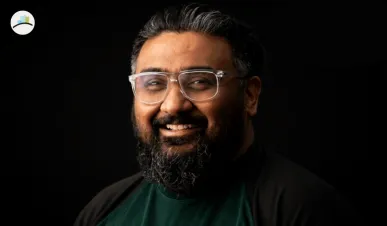
Kunal Shah Becomes First Startup Founder Not a Corporate Lifer to Lead a Major Global Tech Platform as WhatsApp's New Global Head
Every Indian CEO running a major Western tech company before Shah Nadella, Pichai, Parekh, Arora spent decades inside a single corporation before reaching the top; Shah built and exited two companies, then was handed the world's largest messaging platform at 42.
When Meta announced on June 22, 2026 that CRED founder Kunal Shah would succeed Will Cathcart as the global head of WhatsApp, the story was widely framed as another chapter in the rise of Indian tech leadership. That framing is accurate but incomplete. What makes Shah's appointment historically distinct is not his nationality it is his career architecture.
The appointment confirmed
Meta CEO Mark Zuckerberg announced on June 22, 2026 that Shah would join Meta as WhatsApp's next global head, succeeding Will Cathcart, who has led WhatsApp since 2019. Cathcart will move to a newly created division within Meta focused on building next-generation products from the ground up. Shah will relocate from Bengaluru to Meta's headquarters in Menlo Park, California.
Meta Chief Product Officer Chris Cox described Shah as "one of India's most respected entrepreneurs" and said that after Cathcart indicated his intention to step down, Meta searched for a leader with "an intuitive grasp" of WhatsApp's global product opportunity, the ability to navigate the disruption expected from artificial intelligence, and the leadership skills required to run the world's largest communication platform. "Kunal became the clear choice," Cox said.
Shah would become WhatsApp's first Indian CEO. WhatsApp has three billion users globally, including over 500 million users in India.
The deal that came with the appointment
The announcement came alongside Meta's decision to invest $900 million in CRED, securing a 20 per cent minority stake in the fintech company and valuing it at $4.5 billion on a post-money basis. Miten Sampat, who has led strategy and finance at CRED since 2020, will take over as interim chief executive officer with immediate effect. The 42-year-old Shah said he would step away from his operating responsibilities at CRED, though he will continue to remain associated with the firm as a shareholder.
Other Stories-
The pattern and what breaks it
India has produced the CEOs of Google, Microsoft, Adobe, IBM, YouTube, Cognizant, Palo Alto Networks, and now WhatsApp. But there is something different about what just happened. Every name above, except Shah, is a corporate lifer someone who spent decades inside one company and was elevated to the top. Satya Nadella spent 22 years at Microsoft before Ballmer left. Sundar Pichai spent over a decade at Google before being elevated. Each was an insider promoted upward.
Shah's path is structurally different. Born in Ahmedabad and raised in Mumbai, Shah studied philosophy at Wilson College in Mumbai and later enrolled in an MBA programme but dropped out before completing it. His entrepreneurial breakthrough came in 2010 when he co-founded FreeCharge with Sandeep Tandon, a platform that enabled users to recharge mobile phones and pay utility bills while earning rewards. In 2015, e-commerce platform Snapdeal acquired FreeCharge in a deal reported to be worth $400 million at the time the largest startup acquisition in India.
Shah launched CRED in 2018, growing it to 17 million members between 2019 and 2025 while expanding into payments, lending, insurance, commerce, wealth management and credit card services. The company raised more than $900 million from global investors and reported its first profitable quarter in 2026.
He did not rise through Meta. He did not spend years inside WhatsApp. He was an external founder twice over handed operational control of a platform with three billion users.
Why Meta chose a founder over an insider
Mark Zuckerberg said Shah had made CRED into "one of India's most important technology companies" and that he leads with "builder mentality and global perspective," which is needed to run the world's largest messaging app.
Meta has spent six years and over $6.6 billion trying to crack India's payments market. All of it has failed to move the needle significantly. WhatsApp Pay launched in beta in 2018 but India's regulator, the National Payments Corporation of India, imposed strict onboarding caps to prevent any single app from monopolising payments. By the time the cap was fully removed in late 2024, the race was largely over with PhonePe and Google Pay dominating India's UPI market
Shah's appointment is specifically timed to expand WhatsApp's capabilities in payments, commerce and artificial intelligence. Reports suggest Meta tapped Shah to expand its digital payments service via WhatsApp Pay the feature that has not grown as quickly as competing payment apps such as PhonePe and Google Pay.
Shah said upon the announcement: "While it's come very far, the delta between WhatsApp today and its full potential is massive. I look forward to working with Mark, Chris, and the leadership across Meta for the next step in WhatsApp's journey."
The unique angle worth noting: every previous Indian to lead a major Western technology company was a career employee elevated internally. Shah is the first to arrive as an acquisition-linked external appointment a founder handed a global platform not because he worked his way up through it, but because Meta needed what he had built and who he had built it for. That structural difference matters beyond symbolism: it changes what kind of leader WhatsApp will now have, and what Meta is signalling about how it intends to compete in the next decade of global payments.



