
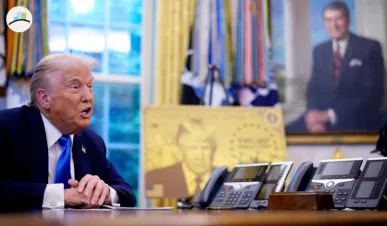
In a major reversal of immigration policy, a federal judge has struck down a controversial Trump administration proposal that would have required employers to pay up to $100,000 in fees when sponsoring foreign workers for H‑1B visas. The decision marks a significant win for employers, workers and immigration advocates who argued that the fee requirement was unlawful and would have made the H‑1B program prohibitively expensive.
The ruling comes amid broader debates over U.S. work‑visa policy and the future of the H‑1B system a core pathway for highly skilled international professionals in tech, engineering, research and health care.
What the Fee Requirement Would Have Done
Under the now‑voided rule, the U.S. government had proposed that employers seeking to sponsor a foreign worker for an H‑1B visa pay a tiered fee, with the highest bracket reaching $100,000 for certain large or heavily H‑1B‑dependent companies.
Critics warned the fee would:
- Price smaller firms out of the market, especially startups and mid‑sized companies.
- Discourage employers from hiring foreign talent, particularly in fields like technology, biotech and academia.
- Disproportionately impact international workers, many of whom already face long waits and uncertainty in visa processing.
Supporters of the rule argued the intent was to reduce reliance on foreign labor and encourage employers to train more U.S. workers but opponents contended the proposal lacked legal grounding and exceeded the government’s regulatory authority.
Federal Judge’s Ruling: Key Points
The federal judge ruled that the fee requirement was invalid and unlawful, on grounds that it went beyond the government’s statutory authority and imposed an unreasonable burden on employers and visa applicants.
🚨 A federal judge in Massachusetts struck down President Trump's $100,000 fee on new H-1B visa applications, ruling the President cannot impose what amounts to a tax on employers without authorization from Congress. pic.twitter.com/5Xv8bqavqs
— SCOTUS Wire (@scotus_wire) June 8, 2026
Key elements of the decision include:
- Overreach of authority: The judge held that the executive branch did not have the legal basis to institute such steep fees without clear congressional authorization.
- Undue burden: The fee structure was found to impose a disproportionate financial burden on employers, particularly in sectors that rely heavily on H‑1B talent.
- Procedural issues: The court also noted concerns with how the rule was drafted and implemented, suggesting it failed to adequately consider economic impacts and public input.
In his written opinion, the judge emphasized that immigration regulations must align with the law and cannot enforce financial penalties or restrictions without clear legislative backing.
What This Means for H‑1B Applicants & Employers
With the fee requirement struck down:
For Foreign Workers
- No sky‑high fees: Employers sponsoring H‑1B visas won’t face the $100,000 surcharge, reducing one major cost barrier for hiring international talent.
- Stability in process: H‑1B applicants and their families can expect more predictability in costs and procedures.
For Employers
- Reduced costs: Companies especially small and mid‑sized firms won’t be forced to shoulder massive visa fees that critics said could have crippled hiring plans.
- Hiring flexibility: Businesses can continue using the H‑1B program to recruit global talent, particularly for tech, engineering and research roles.
For the Tech & Innovation Sector
- Maintaining competitiveness: Silicon Valley and other innovation hubs rely heavily on H‑1B workers; this ruling removes a proposed cost barrier that experts warned could have slowed growth.
- Signal to talent: International professionals may view the U.S. job market as more accessible and stable following the judge’s decision.
Background: The H‑1B Visa Program
The H‑1B visa is a non‑immigrant work visa that allows U.S. employers to hire foreign professionals in specialty occupations typically jobs requiring high levels of education, such as computer science, engineering, medicine and research.
The program is widely used by tech firms and universities, and has long been a flashpoint in debates over immigration, labor markets and economic competitiveness. In recent years, both Republican and Democratic administrations have proposed changes to oversight, fees and eligibility, often sparking legal challenges and industry pushback.
MORE ARTICLES:
Reactions From Employers & Immigration Experts
The ruling drew swift praise from business groups, tech leaders and immigration advocates:
“This decision preserves an invaluable tool for American innovation, helps small businesses compete, and protects workers from punitive costs,” said one industry group spokesperson.
Immigration attorneys also welcomed the ruling, warning that the fee requirement could have triggered legal uncertainty and discouraged talented professionals from pursuing U.S. opportunities.
Critics of the original proposal say it would have reversed decades of H‑1B policy progress and created a two‑tiered system where only the largest and wealthiest firms could realistically hire international talent.
What’s Next: Appeals & Policy Outlook
Although the judge’s ruling invalidates the fee requirement for now, the federal government could appeal the decision potentially sending the case to a higher court. Lawmakers and advocacy groups are already preparing for possible legislative or judicial developments.
Some immigration advocates are also pushing for permanent legislative reforms to ensure the H‑1B system remains fair, transparent and economically responsive including proposals that would try to balance immigrant hiring with domestic workforce development.



