
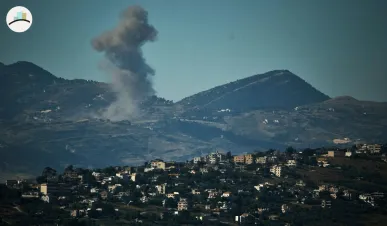
The Iran-Israel war has entered one of its most sensitive phases yet, with high-level US-Iran talks in Switzerland raising hopes for de-escalation while tensions over Lebanon, Hezbollah and the Strait of Hormuz continue to keep the region on edge. What started as a military crisis is now becoming a diplomatic test, as world leaders watch whether negotiations can slow the conflict or whether fresh threats push the Middle East into another dangerous spiral. Reuters reported that the first round of high-level US-Iran talks concluded in Switzerland after a tense opening shaped by Iran’s renewed Hormuz pressure and President Donald Trump’s warnings of possible renewed military action.
What Is Happening In The Iran-Israel War?
The latest Iran news is focused on a fragile diplomatic push between Washington and Tehran. According to Reuters, US and Iranian officials held high-level talks in Switzerland, with Qatar and Pakistan acting as mediators. The discussions reportedly produced a roadmap toward a possible final agreement within 60 days, along with commitments linked to de-escalation, Lebanon and maritime security.
This does not mean the Iran-Israel war is over. It means both sides are testing whether diplomacy can stop the conflict from widening further. The situation remains unstable because several connected flashpoints are still active, including Israeli operations linked to Hezbollah, Iranian pressure around the Strait of Hormuz and uncertainty over nuclear negotiations.
Why The US-Iran Talks Matter
The US-Iran talks matter because they could decide whether the conflict moves toward a controlled pause or a wider regional war. AP reported that Iran’s foreign minister Abbas Araghchi described “major progress” after negotiations involving US Vice President JD Vance and Iranian parliament speaker Mohammad Bagher Qalibaf, with Pakistan and Qatar helping broker the process.
The talks are not only about Iran and the United States. They are also connected to Israel, Lebanon, Hezbollah, oil routes and nuclear concerns. That is why the negotiations are being watched closely across the world.
If diplomacy succeeds, it could reduce immediate pressure in Lebanon and the Gulf. If it fails, the risk of renewed military strikes, shipping disruption and regional escalation could grow again.
Lebanon Has Become A Major Pressure Point
Lebanon is now one of the biggest complications in the Iran-Israel war. The conflict is no longer limited to direct Iran-Israel tensions. It also includes Hezbollah, Israeli military action and the question of whether Lebanon can be brought into a wider de-escalation plan.
AP reported that both sides agreed to create a “de-confliction cell” involving Lebanon, although Israel has maintained its military presence in southern Lebanon and has insisted on its freedom to target Hezbollah.
This is important because Iran has long been linked to Hezbollah, while Israel sees Hezbollah as a serious security threat. Any attempt to reduce the Iran-Israel war will likely need some understanding around Lebanon as well.
MORE ARTICLES:
Strait Of Hormuz Fears Add Global Pressure
The Strait of Hormuz remains one of the most sensitive parts of this crisis. It is a key route for global energy shipments, so any disruption there can affect oil markets, shipping routes and economic stability beyond the Middle East.
Reuters reported that the Switzerland talks followed heightened tensions over Iran’s renewed closure of the Strait of Hormuz and Trump’s threats to restart military action. The talks included discussions on maritime safety, which shows how central Hormuz has become to the wider conflict.
This is why the Iran-Israel war is not only a regional story. Even countries far away from the conflict are watching the Strait of Hormuz because any serious disruption could affect fuel prices and global trade.
Trump’s Warnings Keep Tensions High
While diplomacy is moving, the political tone remains tense. The Guardian reported that President Donald Trump threatened renewed military action against Iran even as Vice President JD Vance cited progress in talks.
That mixed messaging matters. On one side, negotiators are trying to build a path toward de-escalation. On the other side, public threats can make talks more fragile and increase the risk of miscalculation.
For Iran, such warnings may be seen as pressure. For Israel, they may signal that Washington is still ready to act if Iran or its allies escalate. For the wider region, they add uncertainty at a moment when even small moves can carry big consequences.
What Does Iran Want?
Iran appears to be looking for relief from pressure while protecting its influence in the region. Reuters reported that Iran claimed it had secured concessions including oil export waivers and access to frozen assets, though such claims remain politically sensitive and may be contested by other sides.
Iran also wants the Lebanon issue addressed. AP reported that the conflict involving Lebanon and Hezbollah remains a major obstacle in broader US-Iran negotiations.
This shows that Tehran is not treating the war as a single battlefield issue. It is linking military, economic and diplomatic demands together.
What Does The US Want?
The United States appears to be pushing for de-escalation, maritime security and limits on Iranian-backed activity in the region. The Guardian reported that Trump demanded Iran restrain Hezbollah and halt proxy activity in Lebanon, while talks continued through mediation.
Washington’s challenge is balancing pressure with diplomacy. Too much pressure could make Iran walk away from talks. Too little pressure could create criticism that Iran is being rewarded without enough guarantees.
That is why the coming days are crucial. The US needs to show progress without allowing the conflict to appear out of control.
Why Israel Is Still Central To The Crisis
Even when the talks are between the US and Iran, Israel remains central to the conflict. Israel’s security concerns, military actions and stance on Hezbollah directly affect whether any wider agreement can survive.
If Israel believes Hezbollah remains a threat, it may continue operations in Lebanon. If Iran sees those operations as an attack on its regional allies, it may respond through political or military pressure. That is the cycle negotiators are trying to slow down.
This is why a simple ceasefire between two sides may not be enough. The Iran-Israel war is tied to multiple actors, and each one has different red lines.
Could The Iran-Israel War End Soon?
There is no clear guarantee that the Iran-Israel war will end soon. The talks in Switzerland are a positive sign, but the situation is still fragile.
Al Jazeera reported that the US and Iran established a committee to oversee talks and a “de-confliction cell” to end attacks in Lebanon. That suggests diplomacy is moving beyond general statements and into practical mechanisms.
However, the risk remains high because military activity, political threats and regional alliances can quickly disrupt negotiations. A roadmap is not the same as a final deal.
What Happens Next?
The next major thing to watch is whether the 60-day roadmap leads to concrete steps. This could include reduced fighting in Lebanon, clearer rules around the Strait of Hormuz and progress on nuclear-related negotiations.
Reuters reported that negotiators emphasized deconfliction and progress after the first round of talks, while mediators said discussions would continue toward a broader agreement.
If those talks continue, the region may get a temporary breathing space. If they collapse, the Iran-Israel war could again move toward direct escalation, especially if Lebanon or Hormuz becomes the next trigger.
Final Takeaway
The latest Iran news shows a conflict standing between two possibilities. One path leads toward a diplomatic pause, with US-Iran talks trying to reduce tensions around Lebanon, Hezbollah and the Strait of Hormuz. The other path leads back toward military escalation, especially if threats continue and no clear agreement is reached.
For now, the Israel-Iran war is not over. But the Switzerland talks have created a narrow window where diplomacy may still slow the crisis before it expands further.



