
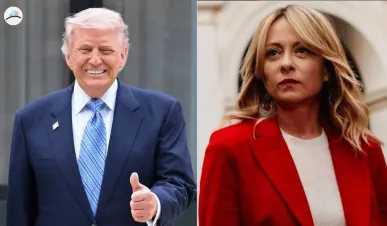
The controversy began after Trump claimed that Meloni repeatedly requested a photograph with him during the G7 meeting. The Italian prime minister quickly dismissed the statement, calling it inaccurate and emphasizing that she never sought special attention or favors from the U.S. president.
Italian Prime Minister Giorgia Meloni accused her one-time close ally Donald Trump of fabricating a story about her, after the US president told an Italian TV channel that she had 'begged' him to take a photo with her at the G7 summit https://t.co/lMm0HYeIZi pic.twitter.com/PCAtaSRv8j
— Reuters (@Reuters) June 19, 2026
Meloni Denies Trump's Allegation
Speaking publicly after Trump's remarks gained international attention, Meloni stated that the story was false and did not reflect what happened during the summit. She insisted that interactions between world leaders at international gatherings are routine and professional.
The Italian leader expressed disappointment over the comments and suggested that such claims do not contribute positively to relations between allied nations.
Her response quickly became a major political topic in Italy, where leaders across different parties weighed in on the dispute.
MORE ARTICLES:
A Rare Public Clash Between Political Allies
Meloni and Trump have often been viewed as sharing similar positions on several political issues, including immigration, national sovereignty, and economic policy. Because of that perceived alignment, the public disagreement surprised many political observers.
While the two leaders have generally maintained cordial relations, recent differences on international policy and diplomatic priorities have highlighted growing distance between Washington and several European partners.
The latest exchange appears to have transformed policy disagreements into a personal dispute that has drawn widespread media attention.
Why the G7 Summit Incident Matters
The G7 summit is one of the world's most important gatherings of major democratic economies, bringing together leaders to discuss global security, trade, energy, and geopolitical challenges.
As a result, interactions between heads of government often receive significant scrutiny. Even seemingly minor exchanges can become major political stories when they involve prominent international figures.
The disagreement over the alleged photo request has become a symbol of broader debates about diplomacy, leadership style, and relations between the United States and Europe.
Italian Leaders Rally Behind Meloni
Following Trump's comments, several Italian political figures publicly defended Meloni. Supporters argued that Italy deserves respect on the international stage and that the country's prime minister should not be portrayed in a manner they consider misleading.
The controversy quickly moved beyond a personal disagreement and became a matter of national pride for many in Italy.
Political analysts noted that public support for Meloni increased after her response, with many voters appreciating her willingness to challenge the remarks directly.
Impact on U.S.-Italy Relations
Although diplomatic relations between the United States and Italy remain strong, the exchange has introduced new tensions into a relationship traditionally built on cooperation within NATO, economic partnerships, and shared strategic interests.
Experts believe the disagreement is unlikely to cause lasting damage between the two countries. However, it has highlighted the challenges that can emerge when political rhetoric intersects with international diplomacy.
The episode also demonstrates how comments made outside formal diplomatic channels can quickly become global news.
What Happens Next?
Neither Trump nor Meloni appears ready to back away from their respective positions. Trump has continued to defend his version of events, while Meloni remains firm in her denial.
As the debate continues, attention is likely to remain focused on the broader relationship between the two leaders and the role personal disputes can play in international politics.
For now, what began as a claim about a photograph at the G7 summit has evolved into a high-profile diplomatic controversy, attracting attention across Europe and the United States.
The incident serves as a reminder that in modern politics, even brief encounters between world leaders can have significant political and diplomatic consequences long after a summit concludes.



