
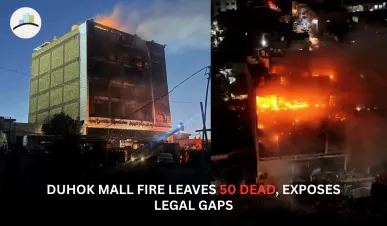
A deadly fire at the Hayat Mall in Duhok, Iraq, has claimed at least 50 lives and left over 60 injured, according to Iraq’s state news agency. While the immediate tragedy has prompted national mourning and emergency response efforts, the deeper crisis lies in the systemic failures the incident has once again laid bare—failures in building safety, governance, emergency preparedness, and accountability.
What Really Caused the Fire?
While the official cause is still under investigation, early reports suggest that electrical faults or unsafe storage of flammable materials may have triggered the inferno. These are not rare in Iraq. The country has suffered a pattern of fatal fires in hospitals, markets, and public venues due to outdated infrastructure, poor regulation, and widespread neglect of fire codes.
In 2021, a massive fire at a COVID-19 hospital in Baghdad killed 82 people. In 2022, another hospital blaze left dozens dead. These are not isolated accidents—they are symptoms of a broader governance failure.
Why This Fire is Politically and Economically Significant
-
Erosion of Public Trust:
Each tragedy chips away at citizens’ confidence in local and national authorities. In Duhok—a relatively stable part of the Kurdistan Region—residents have expressed growing frustration with government negligence. -
Investor Hesitancy in Kurdistan Region:
The Kurdistan region markets itself as a semi-autonomous, business-friendly zone in Iraq. But events like this undermine its appeal to foreign investors, particularly in retail, construction, and tourism. -
Insurance Crisis:
Iraq lacks a robust insurance culture. Victims of such disasters often receive minimal compensation. Businesses and individuals suffer long-term losses, and this discourages formal economic activity. -
Urban Planning and Corruption:
Many buildings in Iraq—including malls—are constructed with little oversight, often involving corrupt contractors and insufficient inspections. Safety is frequently sacrificed for speed and profit.
The Real Danger: Normalizing Tragedy
The media narrative often treats these disasters as unfortunate one-offs. But what is being under-discussed is how such events are becoming normalized in Iraqi life. There’s little public transparency into investigations, and prosecutions—if any—rarely lead to meaningful change.
This normalization fosters a dangerous culture of resignation among citizens, and impunity among officials.
MORE ARTICLES:
Is There Any Silver Lining?
Yes, if tragedy leads to reform. Public outrage in past incidents has spurred temporary reforms, like crackdowns on unsafe facilities. But they often fade with time.
However, this incident, given its scale and location, could become a watershed moment for:
-
Strengthening building safety laws.
-
Increasing pressure on local Kurdish authorities to enforce standards.
-
Bringing international attention (and pressure) to address governance failures.
Why This Story Matters
This is not just a local tragedy—it’s a reflection of national crisis management. It also presents an opportunity to ask harder questions: Why do these fires keep happening? What systems enable them? And who will be held accountable?



