
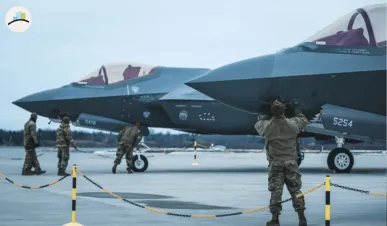
Something dramatic is unfolding in North America’s defence arena, and it could reshape Canada’s military strategy for years. The United States has issued a sharp warning to Canada about its controversial fighter jet deal, hinting that longstanding continental defence arrangements may need to be altered if Ottawa doesn’t proceed with buying Lockheed Martin’s F‑35 stealth fighters.
At the heart of the showdown is a multibillion‑dollar agreement signed a few years ago for Canada to buy 88 F‑35A Lightning II jets — next‑generation stealth fighters that are among the most advanced in the world. But Ottawa is now reassessing the deal, citing high costs and budget pressures. That has drawn a stern response from Washington.
The US Ambassador to Canada, Pete Hoekstra, recently made headlines when he said plainly that if Canada backs away from the F‑35 purchase, the United States would have to rethink how it defends North American airspace — including how NORAD operates.
Why Is the US Taking This So Seriously?
Under the North American Aerospace Defense Command (NORAD), the United States and Canada jointly monitor and defend the continent from airborne threats. This Cold War‑era pact relies on coordinated radar networks, alert systems and quick‑reaction aircraft from both nations.
Wow! Gangster Capitolism... I guess that's one way to cut a deal... Trump needs to start wearing a Bandana... Do they even make Bandana's in GOLD?https://t.co/rKZLTh6Szo
— 21st. Century Patriot (@21st_patriot) January 27, 2026
Hoekstra warned that abandoning the F‑35 deal could leave a capability gap — meaning there wouldn’t be enough advanced jets to respond effectively to fast, stealthy threats approaching North America’s northern reaches. As a result, the US would likely have to buy more of its own F‑35s and fly them more often through Canadian airspace to maintain security coverage.
He also said that, in such a scenario, NORAD itself would have to be altered — a phrase that has raised eyebrows in defence circles in both countries.
Is This a Real Threat or Just Diplomacy?
Canada’s Defence Procurement Minister has publicly downplayed the idea that NORAD is on shaky ground, emphasizing that the defence relationship with the US is “very strong” and not as fragile as some remarks suggest. Canadian officials argue that Ottawa is investing heavily in the military, including radar systems and Arctic defence infrastructure that bolster continental security.
Still, Hoekstra’s comments highlight a deeper tension: on one side, Canada is trying to balance costs, sovereignty and industrial benefits; on the other, the US wants to ensure close integration with its own highly standardized systems. Critics say that if Canada chooses a different fighter platform — such as the Saab Gripen — it could create interoperability headaches with NORAD and NATO partners alike — and force rethink on how patrols and intercept missions are flown.
MORE ARTICLES:
What Could This Mean for Canadian Defence?
If Canada abandoned the F‑35 deal entirely, several consequential developments could follow:
-
More US F‑35 jets over Canadian skies. The United States might increase patrols to cover any capability shortfalls.
-
NORAD restructuring. Canada and the US might have to renegotiate how continental defence missions are shared.
-
Industrial and political fallout. Choosing alternative jets could shift billions in defence spending and political alliances.
-
Debate in Ottawa. Canada’s leaders must weigh public opinion, jobs, costs, strategic autonomy and national security.
This isn’t just a military procurement argument. It’s a strategic era‑defining moment — potentially reshaping how North America protects itself into the 2040s and beyond.
The Bigger Picture: Why Everyone Is Watching
This dispute comes at a time of global uncertainty — rising tensions in Europe, challenges in the Indo‑Pacific, and questions about the future of integrated defence systems. The F‑35 fighter isn’t just any aircraft; it’s at the heart of allied air power, intelligence sharing and rapid response operations.
Canada’s choice — whether to stick with the original purchase, rethink alternatives, or buy a mixed fleet — will serve as a major test of how far a close military partnership can stretch under shared but differing priorities.
NORAD’s future could hinge on this decision, and so could Canada’s role as a key defender of North American skies.



