
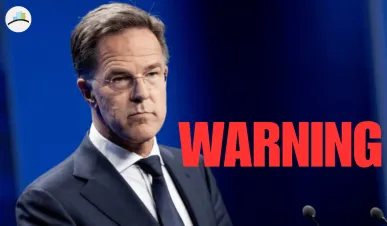
In a striking statement that has left many across Europe reflecting on NATO’s future, NATO Secretary-General Mark Rutte has issued a blunt warning to European nations: “Good luck, keep on dreaming,” if they believe they can secure their defence without the help of the United States. This remark, made in the context of growing tensions over Europe’s military autonomy, highlights the stark realities of NATO’s geopolitical landscape. As Europe grapples with its own defence ambitions and increasing military spending, Rutte’s message is clear: Europe’s reliance on the US is not just a strategic preference but an existential necessity.
The Importance of the US Role in NATO’s Defence Structure
NATO has long been a cornerstone of Western defence, with the US playing a dominant role in shaping the alliance’s military and strategic policies. However, in recent years, the discussion around Europe’s ability to defend itself without US assistance has gained momentum. Some European leaders have argued for more autonomy and a European-led defence strategy, aiming to reduce dependency on the US military. Rutte’s remarks challenge these notions, offering a reality check to those hoping for European independence in security matters.
Rutte’s comment, “Good luck, keep on dreaming,” emphasizes the enormity of the task ahead if Europe intends to secure its own defence. According to Rutte, Europe would require astronomical investments—possibly 10% of GDP per country—just to match the capabilities that NATO, with US support, currently offers. This would include building advanced nuclear and conventional forces capable of deterring threats from global powers like Russia and China.
NOW - NATO Chief Rutte: "If anyone thinks here, again, that the European Union or Europe as a whole can defend itself without the U.S., keep on dreaming." pic.twitter.com/HlJU2mZuVE
— Disclose.tv (@disclosetv) January 26, 2026
Mark Rutte’s Blunt Warning: A Strategic Wake-Up Call
Mark Rutte’s blunt language is not a new phenomenon in NATO’s ongoing discussions about burden-sharing and defence spending. Over the past few years, European leaders have expressed concerns about the US’s waning interest in European defence, especially with the shifting priorities under different US administrations. The concern reached a peak during the Trump administration, with President Trump pushing NATO allies to increase their defence spending.
In response, some European nations have begun pushing for more control over their military affairs, citing the importance of strategic autonomy. France, for example, has advocated for a European army, independent of NATO and US influence. But Rutte’s statement undermines this idea, asserting that any notion of European independence from NATO’s US-led framework is unrealistic. Without US backing, Rutte argues, Europe’s ambitions would be nothing more than fantasy.
MORE ARTICLES:
The Challenge of European Defence Spending
The call for more European defence spending has been a long-standing issue within NATO. Rutte’s warning underscores the severe financial and logistical hurdles Europe would face if it tried to go it alone. Currently, NATO members are expected to meet a 2% GDP spending target on defence, but most countries are still far from meeting that target. Rutte’s assertion that Europe would need to spend much more—up to 10% of GDP—reveals the magnitude of the gap that exists between current European defence capabilities and the level needed for independent security.
In addition to the financial burden, Europe would need to overhaul its military strategy, creating a more robust force capable of responding to both conventional and unconventional threats. This includes not just land forces but also air and naval capabilities, as well as a clear strategy for dealing with cyber and information warfare. These investments would require European governments to make drastic shifts in their budgetary priorities, something that many may find politically and economically difficult.
Strategic Autonomy: The European Dream vs. Reality
The notion of strategic autonomy has become increasingly important for European leaders, particularly in light of rising global instability. The war in Ukraine, tensions with Russia, and the challenges posed by China’s growing influence have all contributed to the desire for Europe to strengthen its own military capacity.
However, Rutte’s comments bring these aspirations into sharp focus. As he pointed out, Europe is not currently in a position to defend itself on its own. Relying solely on European forces would be an immense challenge, one that would require not just spending more money but also achieving a level of military coordination and technological development that is years away. The US military, with its nuclear capabilities and advanced technology, remains essential to NATO’s overall strategic deterrence.
Conclusion: The Future of NATO and European Defence
Rutte’s statement serves as both a warning and a call to action. While Europe may dream of greater military independence, the reality is that its defence structure is inextricably linked to the US. If Europe is to achieve its defence goals, it will need to significantly increase its spending, improve military coordination, and invest in advanced technologies. Whether this will happen remains to be seen, but one thing is certain: Europe’s future security depends on continued collaboration with the US within NATO.



