
California's $20 Billion Delta Tunnel Could Accelerate the Same Golden Mussel Crisis That Just Triggered a State of Emergency
San Joaquin County declared a local emergency over golden mussels on Tuesday the same week regulators conditionally approved the Delta Conveyance Project, while flagging that the tunnel itself may worsen the infestation it was partly designed to protect against.
On Tuesday 28 April 2026, the San Joaquin County Board of Supervisors voted to declare a local state of emergency over golden mussels in the Sacramento-San Joaquin Delta. The same week, California's largest proposed water infrastructure project cleared a major regulatory hurdle with a significant caveat: the project's own approving body flagged that the tunnel could make the mussel problem worse.
The collision between those two developments has not been reported.
The Emergency Declaration
The San Joaquin County Board of Supervisors voted Tuesday to declare a local state of emergency, citing the "imminent threat and potential impacts of invasive golden mussels" on the Sacramento-San Joaquin Delta including water systems, agriculture, recreation, and the environment. The board called on Governor Gavin Newsom to declare a broader state of emergency and requested assistance from the U.S. Bureau of Reclamation and the U.S. Fish and Wildlife Service. Current state-level efforts "do not sufficiently address" the issue, the board said. The governor's office did not immediately respond to requests for comment.
Assemblywoman Rhodesia Ransom, a Democrat from Stockton, warned that California is running out of time. "My community in San Joaquin County is ground zero for this infestation, and we are already seeing the damage firsthand," she said. "California has a narrow window to get ahead of this, and we are already missing it."
How the Mussels Arrived and Where They Have Spread
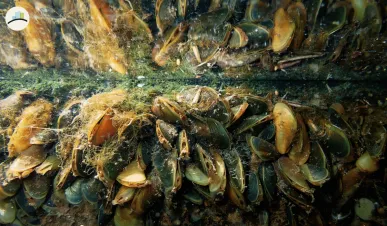
Golden mussels Limnoperna fortunei were first detected in North America at the Port of Stockton on 17 October 2024, likely introduced by a ship travelling from an international port. They were confirmed through genetic testing by the UC Davis Genomic Variation Laboratory and the California Department of Food and Agriculture's laboratory.
Since then they have spread throughout the Delta and into the California Aqueduct, detected at Bethany Reservoir in Alameda County, O'Neill Forebay in Merced County, Dos Amigos Pumping Plant in Merced County, Pleasant Valley Pumping Plant in Fresno County, and Las Perillas Pumping Plant on the Coastal Branch Aqueduct in Kings County.
San Luis Reservoir, a critical piece of water supply infrastructure for farms, Silicon Valley's high-tech industry, and important wildlife refuges on the Pacific Flyway, could see infestations by 2026 to 2027. Lake Oroville's potential infestation could raise water treatment costs and harm fisheries by late 2026
Why Golden Mussels Are Harder to Stop Than Zebra or Quagga Mussels
Golden mussels can tolerate a wider range of environmental conditions than dreissenid mussels the zebra and quagga species that have plagued the Great Lakes since the 1980s. They require less calcium to survive and reproduce, meaning nearly every waterbody in California is at risk of infestation. They tolerate higher salinity than zebra or quagga mussels, making brackish parts of estuaries such as Suisun Bay suitable habitat.
Christopher Neudeck, president of civil engineering firm Kjeldsen, Sinnock and Neudeck Inc., described the spread as an "epidemic," warning that maintenance cycles currently involving hand-scraping and pressure-washing of pipes could become necessary every three months. "Think about a straw going into the water," he said. "If they attach inside, the volumetric flow drops. And with thousands of pipelines throughout the Delta, we could be severely impacted."
-Other Stories-
-O'Sullivan's Chalk Row: The Science Behind Why Robertson and Higgins Want It Banned at Crucible 2026
The Delta Tunnel Paradox
The Delta Stewardship Council voted 6-1 last Thursday to uphold the state's finding that the Delta Conveyance Project a proposed 45-mile tunnel beneath the Delta designed to move water south to farms and cities complies with the Delta Plan. The approval drew praise from Governor Newsom but criticism from environmental groups. Crucially, the council directed the California Department of Water Resources to revisit two issues before final certification: first, whether the tunnel would improve conditions for the non-native invasive golden mussel; and second, potential conflicts involving one of the tunnel's major construction sites near Twin Cities south of Sacramento.
The implication is significant. The tunnel designed to protect and accelerate water delivery through the Delta — could create precisely the kind of enclosed, high-flow infrastructure environment in which golden mussels thrive and spread most effectively. California is simultaneously approving a project that may spread the organism it has just declared a local emergency to contain.
The $200,000 Prize and Why It Signals No Solution Exists Yet
The U.S. Bureau of Reclamation has launched a prize competition called "Halt the Hitchhiker," offering up to $200,000 across three phases for a solution that prevents mussels from travelling in watercraft ballast compartments — built-in tanks that can retain water even when a boat appears dry. Phase one awards up to $25,000 for concept proposals.
The product Zequanox a biological pesticide already used to combat zebra and quagga mussels in the Great Lakes is being optimised for the golden mussel by its manufacturer. However, experts caution that while controlling mussels inside pipes and water infrastructure is achievable, eliminating them from the Delta itself "is not likely feasible or cost effective," according to UC Davis invasive species researcher Dr. Ted Grosholz.
Invasive mussel and clam species already cost an estimated $1.6 billion annually in North America, overwhelmingly in infrastructure damage rather than management or prevention. "We're just getting started," Grosholz said.
The Arvin-Edison Water Storage District, which found golden mussels in its system in December 2025, approved a $2.5 million emergency budget and completed a 30-day treatment by early April 2026. That $2.5 million response covered a single district. California has hundreds.



