
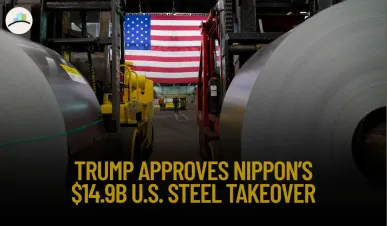
In a major development reshaping America’s manufacturing and industrial policy, former President Donald Trump has formally backed Nippon Steel’s proposed acquisition of U.S. Steel for $14.9 billion. The approval is contingent on a tailored security agreement aimed at protecting U.S. national interests.
More Articles:
Strategic Review Ends in Conditional Approval
The proposed sale, which had drawn national attention and political controversy since its initial announcement in late 2023, was previously under scrutiny by regulatory agencies and policymakers. With Trump now in favor of the deal—pending specific national security protections—the path appears clearer for one of the largest foreign investments in the U.S. steel sector in recent history.
This decision follows months of negotiations centered around protecting critical infrastructure, preserving American jobs, and ensuring foreign influence is kept in check through strategic oversight.
What’s Inside the Security Agreement?
The approval isn’t without guardrails. Under the security agreement submitted to the U.S. government, Nippon Steel has committed to several binding provisions. Among the most notable: a pledge to invest $11 billion in U.S.-based operations by the year 2028.
To further reinforce national oversight, the agreement includes a "golden share" held by the U.S. government—granting federal officials the authority to veto certain major business decisions if they’re deemed a risk to national security.
This mechanism, though rare, is increasingly being used in high-stakes transactions involving critical industries and foreign buyers.
Economic and Industrial Impact
The deal is expected to reshape the U.S. steel landscape by infusing capital, advanced technology, and international expertise into one of the country’s most iconic manufacturers. The leadership of U.S. Steel has indicated that this partnership will help modernize production facilities, increase global competitiveness, and potentially open new markets.
However, industry analysts note that such deals often bring uncertainty for labor forces and local economies. While infrastructure upgrades could boost productivity and create new roles, the long-term employment effects will depend on how the integration is managed.
Political and Public Reactions
Reactions to the deal have been mixed. Supporters hail the agreement as a win for U.S. industry, suggesting that the added capital and oversight mechanisms strike a fair balance between economic opportunity and national security.
Critics, however, continue to voice concern over the implications of foreign ownership in a vital sector like steel, particularly with China and other nations increasing influence in global supply chains.
Labor unions and economic nationalists have urged close monitoring of the post-acquisition period to ensure commitments made by Nippon Steel are honored fully and transparently.
What This Means for U.S. Foreign Investment Policy
This deal could set a new benchmark for how future foreign investments in key U.S. industries are evaluated. By requiring direct federal oversight through tools like golden shares and conditional capital investments, the U.S. is showing a more proactive stance in preserving strategic autonomy while staying open to international partnerships.
Such a model may well become standard practice in sectors deemed vital to national security—ranging from defense and semiconductors to critical manufacturing and infrastructure.
Disclaimer:
This article is based on information reported from publicly available sources and is written for editorial and informational purposes only. Procapitas does not make any warranties regarding the completeness or accuracy of this coverage. Readers are advised to consult official regulatory documents and filings for full details.
Source
Bloomberg Article: US Steel Sale to Nippon Steel Poised To Close After Trump Deal



