
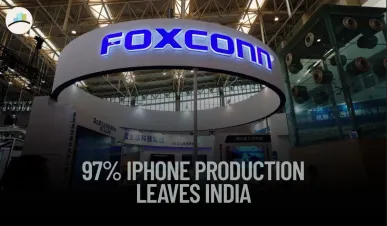
In a development that could impact Apple’s broader supply chain strategy, Foxconn — a leading contract manufacturer for Apple — has significantly scaled back its iPhone production activities in India. According to industry sources, nearly 97% of the iPhones initially slated for production in India have now been redirected back to China. The decision reflects growing operational challenges and mounting geopolitical tensions between India and China, complicating Apple’s efforts to diversify beyond its China-centric manufacturing base.
More Articles:
Tensions Disrupt Production Expansion in India
Foxconn’s initial plans were geared toward significantly ramping up iPhone output in India, in alignment with Apple’s broader strategy to reduce reliance on Chinese factories. However, recent frictions have disrupted these ambitions. Chinese authorities have reportedly tightened restrictions on the export of specialized machinery and personnel to India, citing concerns over national security and intellectual property protections.
This unexpected regulatory clampdown has hindered the movement of skilled Chinese technicians and key production equipment, which are essential for advanced smartphone manufacturing. As a result, Foxconn has had to temporarily suspend new deployments and turn to Taiwanese staff to keep Indian operations running — a stopgap that hasn’t fully stabilized operations.
Apple’s Diversification Strategy Faces New Hurdles
Apple has been actively working to spread its manufacturing footprint across different regions, including India and Vietnam, in response to rising labor costs, trade risks, and political pressures tied to its dependency on China. The latest production shift marks a significant setback to those efforts.
The move back to China reflects a broader struggle: establishing a fully functional and reliable production ecosystem outside China is proving more complicated and politically sensitive than expected. While India remains an attractive destination due to its growing market and government incentives, executing large-scale tech manufacturing there has proven logistically and diplomatically challenging.
Implications for India’s Tech Manufacturing Push
India’s ambitions of becoming a global electronics manufacturing hub take a hit with this redirection of iPhone production. The country has been offering favorable policies to attract top-tier tech manufacturers, positioning itself as a long-term alternative to China.
Foxconn’s retrenchment could dampen investor sentiment and delay expected job creation and economic activity that were anticipated with the iPhone production ramp-up. It also signals that while India has made strides, it may still lack the deep supply chain infrastructure and geopolitical stability needed to take on China's dominant role in high-end electronics manufacturing.
#Foxconn sends 97% of India #iPhone exports to US as Apple tackles Donald Trump's tariffs#TrumpTariffs https://t.co/qsf0enKVJt
— CNBC-TV18 (@CNBCTV18Live) June 13, 2025
Global Supply Chain Fragility Back in Focus
This development once again brings to light the fragility of global supply chains, especially for tech companies relying on specialized labor and equipment spread across borders. For Apple, it reinforces the importance of building resilience into its production network — not just through geographic diversification, but also by accounting for political risks and regulatory shifts that can arise unexpectedly.
Going forward, Apple and its partners may have to rethink their timelines and logistics strategies to balance operational flexibility with global expansion.
Disclaimer
This article is based on publicly available reports and insights as of the date of publication. It is intended for informational purposes only and does not constitute financial or investment advice. All trademarks and company names mentioned belong to their respective owners. Please consult with appropriate professionals before making any financial or business decisions.
Source:
Yahoo Finance - Exclusive-Foxconn sends 97% of India iPhone exports to US as Apple tackles Trump's tariffs



