
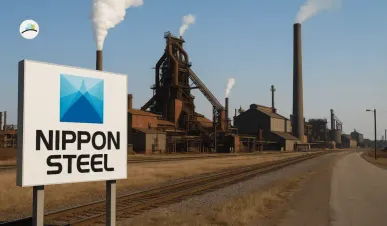
As Japanese industrial giant Nippon Steel moves forward with its $15 billion acquisition bid for U.S. Steel, markets are watching closely for signs of near-term financial and strategic payoff. The deal, poised to reshape the global steel industry, has garnered political attention and investor skepticism alike.
Strategic Expansion Amid Global Tariff Tensions
Nippon Steel's proposed acquisition is more than a cross-border merger—it’s a calculated attempt to cement a U.S. foothold in an increasingly protectionist trade landscape. By absorbing a legacy American manufacturer, the Tokyo-based steelmaker aims to secure production capacity within the U.S. and hedge against tariffs that have increasingly defined international trade relations.
The combined entity would become the world’s third-largest steel producer by volume, offering Nippon Steel a more diversified manufacturing base and access to American infrastructure projects—both public and private.
In a bid to safeguard strategic autonomy, U.S. officials are reportedly weighing a "golden share" arrangement to retain veto power over critical decisions post-merger. This would allow Washington to maintain a degree of control over U.S. Steel even after foreign acquisition.
Read more on how the U.S. is exploring a golden share strategy to protect national interest.
Political Support Strengthens the Case
🇺🇸 Golden share, golden era?
— Juniorstocks.com (@Junior_Stocks) May 28, 2025
The U.S. just secured a golden share in Nippon’s $14B deal with U.S. Steel—keeping control in American hands. Trump’s industrial strategy just took a bold new turn.
Steel is back. And this time, it’s personal.#Nippon #Steel pic.twitter.com/VWXhJLYnif
The deal received a notable endorsement from former U.S. President Donald Trump, who praised it as a pathway to job creation and national economic resilience. His public support pushed U.S. Steel’s share price up by 21%, while Nippon Steel shares rose 7% on optimism that political tailwinds might ease the regulatory path forward.
However, the support came with clear conditions. Trump emphasized that the company must maintain its American identity—insisting that operations, branding, and decision-making remain rooted in the U.S.
Explore how Trump’s “America First” stance influences his conditional support for Nippon Steel’s takeover.
Still, national security concerns persist. The Committee on Foreign Investment in the United States (CFIUS) is expected to play a decisive role in evaluating the transaction’s implications. The outcome of these reviews could determine the pace and trajectory of the deal’s final approval.
Investor Caution Over Capital Allocation
Despite the bullish political narrative, analysts have raised concerns over the capital-intensive nature of the acquisition. Nippon Steel's plans to raise funds—potentially through equity issuance—have triggered worries about shareholder dilution and long-term return on investment.
Furthermore, part of the capital will reportedly support coal-fired operations—an unpopular move in an ESG-conscious market increasingly focused on decarbonization. This could alienate some institutional investors even as it shores up near-term production reliability.
A Defining Moment for Global Steel Dynamics
If finalized, the merger could usher in a new phase of consolidation and competitiveness in the global steel sector. But with regulatory hurdles, environmental concerns, and market skepticism still in play, the path to closing remains complex.
Investors are not only asking whether Nippon Steel can secure approval—they’re asking how soon it will benefit from what is being described as a bold, high-stakes bet on the U.S. industrial rebound.
Source: As reported by Reuters.
Disclaimer: This article is for informational purposes only and does not constitute financial advice.



