
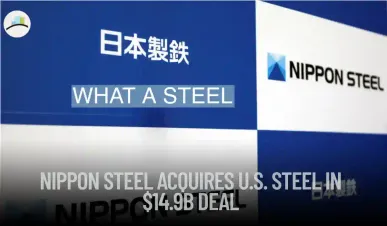
The End of an American Industrial Era?
The $14.9 billion acquisition of U.S. Steel by Japan’s Nippon Steel is more than a mega-deal—it's symbolic. Founded in 1901, U.S. Steel was once the bedrock of American industrial supremacy. Its delisting from the NYSE after 123 years signals a seismic shift in global industrial power, where Asian manufacturers now dictate legacy market trajectories once owned by the U.S.
Why Did This Happen?
-
Decades of Underinvestment in U.S. Steel
While Nippon reinvested in high-efficiency furnaces and specialty steel, U.S. Steel lagged behind. Capital expenditure stagnated, and innovation was sparse—making it ripe for a strategic buyout. -
Vertical Integration Push by Nippon
Nippon Steel aims to strengthen its global footprint in automotive, green steel, and advanced alloys. Acquiring U.S. Steel gives it access to North American contracts and a springboard for reshoring-friendly production. -
Resilience to Nationalist Pushback
Despite U.S. political resistance (especially from labor unions and lawmakers worried about foreign ownership), Nippon strategically assured job protections, production continuity, and domestic presence—neutralizing opposition.
Read More:
What Isn’t Being Discussed Enough
-
U.S. Vulnerability in Critical Materials
This deal lays bare a structural weakness in the U.S.—reliance on foreign ownership for key supply chains, even for materials vital to defense, infrastructure, and EV manufacturing. -
Implications for Labor Unions
Although job guarantees are promised, union leverage may erode over time as cultural and operational shifts seep in. Japanese efficiency models may clash with U.S. legacy labor structures. -
Steel Sovereignty in a Reshoring Era
In an era where reshoring and “Made in America” are federal goals, the symbolic loss of U.S. Steel raises questions: Who really owns the American industrial revival?
Global Economic Implications
-
Japan’s Industrial Renaissance
This move aligns with Japan’s new industrial policy push: targeted acquisitions abroad, AI-augmented manufacturing, and climate-compliant steel technologies. -
New Template for M&A in Legacy Sectors
Expect more foreign buyers to pursue aging Western brands with regional distribution and brand value but underutilized assets—especially in chemicals, energy, and machinery. -
Geopolitical Steel Rebalancing
With China’s overcapacity and Europe’s green transition underway, Japan now anchors premium steel production across Asia and North America, challenging China’s volume play with a value-centric strategy.
Disclamer - This article is an independent, expert analysis based on publicly available economic indicators, financial market movements, and historical trends. It is not intended as investment advice or a recommendation to buy or sell any financial instrument. The views expressed are those of the author and do not represent any institution. All investments carry risk, and readers should consult a qualified financial advisor before making any decisions. Market conditions and geopolitical situations may change rapidly, and past trends are not guarantees of future performance.



