
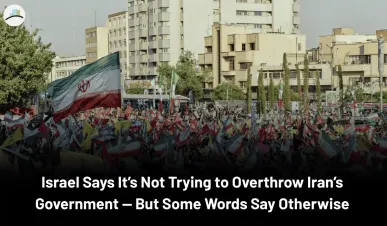
Tel Aviv, June 19, 2025 — So here’s the update everyone’s been talking about. Israel’s President, Isaac Herzog, came forward and said something that’s got a lot of people paying attention. He said that Israel isn’t trying to bring down Iran’s government. Their focus, he explained, is just on stopping Iran from building or using nuclear weapons and missiles. Nothing more than that.
Honestly, with everything going on right now between the two countries, it was a needed clarification — especially for world leaders trying to keep the peace.
IDF spokesman in an interview with foreign media: "Israel's goal is not to overthrow the regime in Iran.
— shoko 007 (@SYaacobi) June 19, 2025
We do not plan to change the regime there.
Our goals are to neutralize the threat that the Iranian nuclear program and its missiles pose to Israel.
Our military goal is to… pic.twitter.com/Mk4tcW7sxM
Herzog Says It’s About Security, Not Politics
When Herzog made his statement, it was clear he was trying to ease the tension. He basically said, “Look, we’re not trying to start a new war or mess with Iran’s politics. We just want to stop the nuclear danger.” And in a way, that made sense.
But here’s the thing — that’s just one voice. While Herzog is the President, not everyone in the Israeli government is saying the same thing. And that’s where it starts to get complicated.
Defense Minister’s Words Tell a Different Story
Not long after Herzog spoke, Israel’s Defense Minister, Israel Katz, said something totally different. He went as far as saying Iran’s Supreme Leader, Ayatollah Khamenei, “cannot continue to exist.” That kind of comment raises a lot of questions.
Is this just his personal opinion? Or is it a sign that some parts of the Israeli leadership see this as more than just a defense mission? It's not totally clear, but either way, it sends a very different message than what Herzog said. And honestly, mixed signals like that don’t help when tensions are already this high.
No Radiation Leaks After the Airstrikes, Says IAEA
Here’s a small but really important detail that didn’t get much attention — the IAEA (International Atomic Energy Agency) has confirmed that, even though Israel hit several nuclear-related sites in Iran, there’s been no radiation leak. That’s kind of a big deal.
Sites like Natanz and Fordow were hit pretty hard, and people were worried about a possible environmental disaster. But as of now, international nuclear inspectors say there’s no sign of any radioactive release or contamination. So while the damage is real, it hasn’t crossed that dangerous line — yet.
Where Did the Strikes Actually Land?
Over the past several days, Israel’s military has launched a number of targeted airstrikes. According to reports, they’ve hit:
-
Iran’s Defense Ministry in Tehran
-
Missile launch and storage facilities near Natanz
-
Underground labs and infrastructure in nuclear support zones
-
Key communication hubs
Iran didn’t stay silent, either. They fired missiles back, hitting several areas in Israel. Both sides have reported civilian casualties, and the situation is tense, to say the least.
Why This Story Matters Globally
This isn’t just about two countries. The impact is spreading way beyond that. Here's why:
-
The region is already on edge, and more attacks could pull in other nations.
-
Global oil and gold prices are jumping, which affects economies everywhere.
-
Diplomats are struggling to get a handle on the messaging from Israel, especially when leaders aren't totally in sync.
People are watching closely — not just because of the military side of things, but because this could really change how countries talk to each other in the next few weeks.
Read More:
What’s Next?
Right now, it’s hard to say what’s coming next. Israel says it’s sticking to military targets tied to nuclear threats. But comments like the one from the Defense Minister make things harder to predict.
At the same time, Iran isn’t backing down, and the pressure on both sides is building. If there’s going to be any real chance at calming things down, world leaders will need to step in fast. Whether that happens — well, we’ll have to wait and see.



