
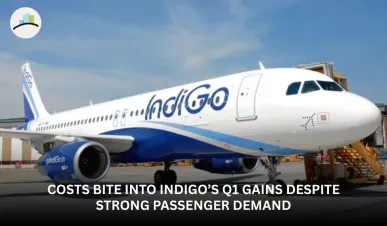
Indigo’s Q1 Earnings Preview: Revenue Up, But Profit Faces New Headwinds
When InterGlobe Aviation, the operator of IndiGo, reports its Q1 FY25 results, the headline numbers might look like a paradox. Revenue is likely to grow 7–9% year-on-year, yet profits may take a hit. This isn’t just a quarterly blip—it’s a warning about structural pressures that could reshape India’s aviation sector over the next 12 months.
InterGlobe Aviation Q1 Results Preview: Indigo's PAT likely to dip despite up to 9% revenue growth. Here’s whyhttps://t.co/xV2aQG0eww
— ETMarkets (@ETMarkets) July 29, 2025
Why Is Profitability Under Pressure Despite Growth?
Analysts expect IndiGo’s Profit After Tax (PAT) to contract because of three key factors:
-
Foreign Exchange Impact: The rupee’s volatility against the US dollar has driven up aircraft lease costs and maintenance expenses, as most are dollar-denominated.
-
Higher Fuel Costs: Jet fuel prices have been creeping up again after a relatively stable Q4 FY24.
-
Competitive Pricing: With Air India and Akasa expanding aggressively, ticket pricing hasn’t kept up with rising costs.
In short, growth in passenger traffic hasn’t translated into margin expansion.
What’s Not Being Discussed Enough?
-
Currency Mismatch Risks:
Over 40% of IndiGo’s costs are in dollars, while revenues are in rupees. A weak rupee amplifies this imbalance. Few Indian carriers have hedged currency risk effectively. -
Fleet Expansion Trap:
IndiGo’s aggressive fleet growth—while necessary for market share—creates a fixed-cost base that’s hard to manage if yields weaken. Slower GDP growth or a demand shock could turn this into a liability. -
Geopolitical Exposure:
Rising tensions in West Asia and Red Sea disruptions have increased flight detours and fuel burn. Investors are underestimating how these could affect Q2 and Q3.
Why This Matters for Investors and the Economy
-
Consumer Angle: Fares may remain relatively affordable in the short term due to competition, but volatility could return if losses mount across the sector.
-
Investor Angle: While IndiGo remains the market leader, margins could stay under pressure, making valuations vulnerable to even small external shocks.
-
Macro Angle: Aviation has become a bellwether for discretionary spending in India. Slowing profits could indicate that post-COVID pent-up travel demand is plateauing.
Historical Parallels
The current pattern resembles the early 2010s, when Kingfisher Airlines expanded aggressively during high fuel cost cycles—only to collapse under financial stress. IndiGo is better managed, but similar cost pressures could erode the cushion that has long kept it safe.
Also read on Procapitas
Hidden Opportunities
-
International Focus: Weak domestic margins may push IndiGo to double down on international routes where yields are stronger.
-
Ancillary Revenues: Baggage fees, co-branded credit cards, and cargo could become key levers for margin resilience.
-
Strategic Partnerships: Joint ventures or alliances (especially in the Middle East) could help manage global route risk.
Bottom Line
Revenue growth no longer guarantees profitability in Indian aviation. The Q1 results will be a reality check: Is IndiGo’s scale an advantage—or a vulnerability—when the macro winds shift?
Disclaimer:
This article is intended for informational purposes only and does not constitute investment advice. Procapitas does not provide personalized financial recommendations. Always consult a licensed financial advisor before making investment decisions. Information is based on publicly available sources as of June 2025 and Procapitas’ independent research and analysis.



