
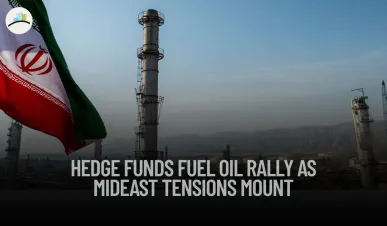
Hedge Funds Flood Oil Markets as Geopolitical Risk Surges
Rising geopolitical instability in the Middle East—particularly between Israel and Iran—is triggering a new wave of speculative activity in global oil markets. Hedge funds are leading this momentum, aggressively increasing their exposure to crude oil by purchasing long positions in both futures and call options.
West Texas Intermediate (WTI) crude spiked nearly 7% in a single session—its largest daily jump since 2022—as fears mounted over a potential disruption in key supply routes. The Strait of Hormuz, which transports roughly 20% of global oil shipments, remains a flashpoint. Even a temporary shutdown would send shockwaves through global energy markets.
With this in mind, U.S. oil producers are seizing the opportunity. Many have locked in future revenues by aggressively hedging production through 2026, hoping to take advantage of elevated prices and uncertain supply conditions.
More Articles:
Bullish Bets: Call Options on $80+ Oil Soar
The financial bet on rising oil prices is most visible in the surge in call option activity. Hedge funds have been buying contracts that would become profitable if oil rises above $80 a barrel. In recent days, tens of thousands of $80 WTI call options for August 2025 were snapped up—a clear signal that speculative traders expect more upside.
This trend mirrors historical patterns during times of geopolitical risk. In previous oil market cycles, from the Gulf War to the Arab Spring, hedge funds have used leverage and options to magnify gains when volatility rises. The current activity suggests that funds are not only positioning for gains but also creating upward pressure on prices through sheer volume.
These speculative trades, while potentially lucrative, also amplify market fragility. Should tensions ease or macroeconomic demand wane, the same positions could quickly unwind, sparking a volatile correction.
Volatility Surges as Market Uncertainty Deepens
One of the clearest signs of market stress is the spike in the crude oil volatility index, or OVX. This measure of expected price fluctuations surged over 25%—marking its highest reading in over a year.
The volatility is being driven not only by fear of physical supply disruptions but also by uncertainty over the global response. Sanctions, military escalations, or supply chain sabotage could materialize without warning, making oil pricing far more erratic than usual.
For financial markets, a rising OVX typically signals caution. It warns of increased hedging activity by producers, more aggressive positioning by speculators, and—importantly—a reduced margin for error in trading strategies.
Hedge Funds Are Not Alone: Diversified Strategies Emerging
While hedge funds are pouring capital into long oil trades, some institutional investors are taking a more nuanced approach. Multi-asset funds and macro managers are hedging oil exposure with alternative assets such as gold and inflation-linked government bonds.
The reasoning is simple: geopolitical instability that lifts oil prices also tends to generate broader economic volatility, potentially dragging down equities and increasing inflation risk. By combining bullish oil bets with exposure to inflation-protected assets, these investors are building more resilient portfolios.
Some are also shorting travel and industrial stocks that may suffer if oil prices rise too far, too fast. In this environment, balanced positioning—not blind optimism—may ultimately yield better long-term returns.
Good work team
— zerohedge (@zerohedge) June 20, 2025
Hedge Funds Rush Into Oil Long Bets as Mideast Conflict Grows https://t.co/qK86l8iuP6
Structural Shifts in Oil Demand and Supply Chains
While headlines focus on short-term price action, the bigger story may be the structural transformation underway. U.S. shale producers are becoming more disciplined, preferring to hedge profits rather than overproduce. Meanwhile, OPEC+ is walking a tightrope between market stability and revenue maximization.
The war premium in oil prices is also reshaping investment flows. Emerging markets dependent on cheap energy are facing higher import bills, while energy-exporting nations like Saudi Arabia and the UAE may see temporary windfalls.
However, if the geopolitical risks escalate beyond containment—such as actual disruption of Hormuz shipping lanes or targeted strikes on production infrastructure—the entire oil trade could be repriced for a more dangerous world. In that case, hedge funds betting on $80 oil may end up looking conservative.
Disclaimer:
This article is intended for informational purposes only and does not constitute investment advice. Procapitas does not provide personalized financial recommendations. Always consult a licensed financial advisor before making investment decisions. Information is based on publicly available sources as of June 2025 and Procapitas’ independent research and analysis.



