
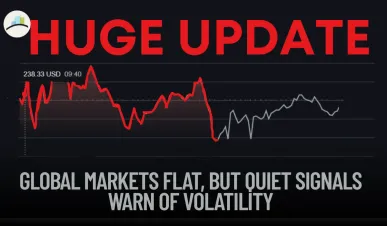
As financial markets meander through a volatile June, the global mood feels oddly calm. But beneath the surface of stable stock indices and drifting bond yields lies an unspoken signal: investors are bracing for asymmetric shocks from both geopolitics and central banks.
Global equities are largely flat, the dollar is modestly strong, and gold is gently rising. This is not a sign of confidence—it’s a collective pause before the next move.
🎯 What’s Actually Driving This Quiet Panic?
While headlines focus on the Israel-Iran conflict and the Fed’s June decision to hold rates steady, these are just surface tensions. The real concern lies in how layered risks are stacking simultaneously:
1. Global Liquidity Is Diverging Fast
The Fed is signaling rate cuts. The ECB is easing. But the BoE, BoJ, and other central banks are split or tightening. This fractured response is beginning to fracture global capital flow.
Implication: Investors can no longer rely on synchronized global liquidity cycles. That raises currency volatility, complicates hedging strategies, and exposes EM assets to blindside exits.
2. Risk Pricing Is Broken Across Asset Classes
Equities are showing resilience. Bond markets are flashing caution. Oil is rising—but not panic-level. Gold is steady. This divergence is historically rare.
Hidden signal: Cross-asset correlations are breaking down. In past crises (2008, 2020), assets moved together. Today, markets are misaligned and indecisive, reflecting deep uncertainty—not strength.
3. Markets Are Underpricing Political Risk Premiums
Wall Street is not fully pricing in the chance of U.S. military involvement in the Middle East. If Iran responds to Israeli strikes by targeting U.S. assets or allies, we could see a sudden spike in oil, dollar strength, and a 5–7% correction in risk assets—especially in EMs and global cyclicals.
Read More:
🧠 Historical Parallels to Watch
This moment is structurally similar to late 2019, just before COVID hit:
-
Trade tensions were fading
-
Central banks were easing
-
Markets looked “orderly”
But liquidity was fragile, valuations were extended, and the real risks were non-economic (like pandemics or war). Today’s “orderly calm” masks potential volatility bombs: unexpected military escalation, cyberattacks, oil supply disruptions, or flash bond selloffs.
🧩 Not Discussed Enough: Cyber-Risk and FX Volatility
If the Middle East conflict escalates, expect a rise in cyber disruption, particularly in financial and energy infrastructure. That’s an underpriced tail risk.
Also, the divergence in rate paths will widen the volatility in FX markets, especially in USD-EUR, USD-JPY, and USD-INR pairs. For global businesses and funds, this adds a new layer of P&L risk not yet visible in earnings revisions.
💡 Investment Implications
-
Buy volatility (VIX options, FX vol products) while it's cheap.
-
Rotate to liquid quality: Mega-cap, dividend-yielding stocks, not high-beta tech.
-
Look at short-duration bonds as long-end volatility picks up.
-
Energy and defense sectors may outperform if war risk rises.
🚨 Bottom Line
Markets aren’t calm—they’re coiled. Investors are not bullish—they’re boxed in.
The Fed may cut. War may escalate. Inflation may reaccelerate.
This strange moment of stillness could be a prelude to multi-asset chaos.
Disclaimer
This article is an independent, expert analysis based on publicly available economic indicators, financial market movements, and historical trends. It is not intended as investment advice or a recommendation to buy or sell any financial instrument. The views expressed are those of the author and do not represent any institution. All investments carry risk, and readers should consult a qualified financial advisor before making any decisions. Market conditions and geopolitical situations may change rapidly, and past trends are not guarantees of future performance.



