
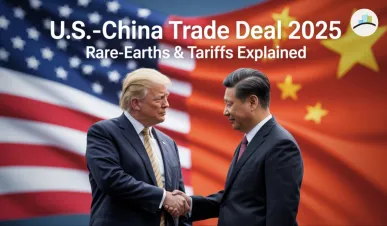
U.S.–China Trade Breakthrough: A Step Back from the Edge
In a surprise diplomatic move, the United States and China have agreed on a framework for a new trade deal, just days before President Donald Trump and President Xi Jinping are set to meet in Beijing.
The announcement, made on 27 October 2025, signals a potential thaw in a years-long standoff that threatened to trigger another global trade war. The deal aims to avoid new 100% tariffs on Chinese electronics and vehicles while addressing rare-earth export restrictions imposed by Beijing earlier this year.
“This framework is not the final deal, but it’s a strong start,” a senior U.S. trade official told reporters. “Both sides know the stakes — for jobs, technology, and global stability.”
MORE ARTICLES:
Why This Deal Matters for Americans
The outcome of the Trump–Xi summit could directly affect consumer prices, tech supply chains, and energy security in the U.S.
Here’s how:
-
📱 Smartphone & electronics prices: A tariff freeze means tech imports — iPhones, laptops, electric-vehicle parts — won’t spike in cost before the holiday season.
-
⚙️ Manufacturing stability: The U.S. semiconductor and auto industries depend heavily on Chinese components. Any easing of restrictions helps maintain production flow.
-
⚡ Rare-earth elements: These are critical for batteries, chips, and clean-energy tech. China controls over 70% of global output — but Washington is now seeking diversified access.
Rare Earths: The Real Power Game
At the heart of this deal lies rare-earth minerals — 17 obscure metals that power nearly everything from EVs to missiles.
Earlier in 2025, China limited rare-earth exports in retaliation for U.S. tech sanctions, sending commodity prices soaring. This new framework suggests a mutual easing of controls, potentially giving American industries breathing room — at least temporarily.
“This isn’t just about trade — it’s about technological dominance,” notes Dr. Leah Brown, an energy-policy expert at MIT. “Whoever controls rare earths controls the future of clean tech.”
The Bigger Picture: Trump’s Global Strategy
The deal comes as President Trump pushes a broader strategy of “economic nationalism through negotiation” — aiming to bring manufacturing back to U.S. soil while leveraging deals abroad.
The upcoming Trump–Xi meeting is expected to finalize terms on:
-
Tariff rollback timelines
-
Semiconductor cooperation
-
Agricultural imports (soybeans, corn)
-
Cybersecurity guarantees
While markets reacted positively — with the Dow Jones and S&P 500 both up in early trading — analysts warn that implementation will be the real test.
What Happens Next
The Trump–Xi summit, expected on 30 October 2025, will determine whether this “framework” becomes a full-fledged treaty or stalls like previous attempts.
Global investors are watching closely — and so are everyday Americans wondering whether the cost of living will finally ease.
If both sides follow through, it could mark the first meaningful stabilization in U.S.–China economic ties in nearly a decade.



