
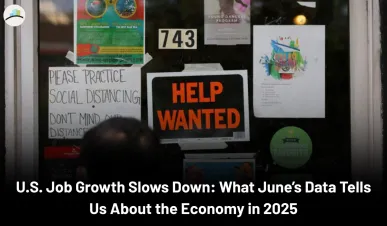
Job Growth in the U.S. Is Slowing Down — And It's Starting to Show
The U.S. job market, which had been pretty steady for a while, seems to be slowing down now. The latest June report is expected to show only about 110,000 new jobs, which is much less than what we saw earlier this year. The unemployment rate might tick up to 4.3%, and that’s got people wondering—are we heading into something worse?
This isn’t just a random dip. A bunch of things are adding up—tariffs, stricter immigration rules, budget cuts. It's all creating this mix where businesses aren’t sure what to do next. And when there’s too much uncertainty, companies usually freeze hiring first.
Mixed US jobs data
— Shane Oliver (@ShaneOliverAMP) July 2, 2025
ADP private employment for June -33k. Its had a hit and miss relationship to payrolls but does point to a slowing in jobs, like ISM and consumer surveys
Against this Challenger job cuts fell 1.6%yoy.
(JP Morgan and Bloomberg charts) pic.twitter.com/fljf8tcxnb
Why This Might Be Happening Right Now
You can’t really blame one single reason. It’s more like a chain reaction of things hitting at once. First, the U.S. brought back tariffs on goods from China and others, so stuff is getting more expensive to import. That hurts businesses, especially those making things here.
Then there’s the immigration issue. With more crackdowns and fewer workers allowed in, some industries just don’t have enough hands on deck. Agriculture, restaurants, construction—they’re all struggling to find people, which makes it harder to grow or even keep up with demand.
And on top of that, the government passed this huge bill that cuts funding in healthcare, education, and clean energy—places where a lot of jobs usually come from. So while some areas like defense might grow, others are shrinking fast.
People Aren’t Talking Enough About Confidence
Honestly, what’s not being said enough is how much of this is really about confidence. Businesses aren’t just looking at today—they’re thinking about six months down the line. And right now, there’s too much going on for them to feel safe hiring.
I spoke to a mid-size business owner who said, “We’re not hurting badly, but we’re not expanding either—because we don’t know if the rules will change again.” That kind of uncertainty doesn’t show up in job numbers, but it’s definitely real.
If people aren’t hiring because they’re unsure about the future, that’s a big warning sign. It means growth can stall—not because we don’t have talent or money, but because no one wants to take risks.
More Articles:
What’s the Risk Here?
Some folks are saying this could be the early signs of a recession. But I don’t think it’s that black and white. It’s more like the economy is drifting—not growing fast, but not crashing either. That kind of slow-down is hard to shake off.
There are a few hidden risks to watch:
-
People who lose their jobs might take longer to find new ones—especially older workers.
-
Companies might stop giving raises or start replacing people with AI tools to cut costs.
-
And fewer people might even stay in the job market altogether. That makes the unemployment numbers look okay, but the real story is worse.
If this keeps up, we might see a long stretch of sluggish growth—and honestly, that can be just as damaging as a short-term crash.
What the Fed Might Be Thinking
So now the Federal Reserve is in a tricky spot. They’ve been keeping interest rates high to fight inflation. But if jobs keep slowing and unemployment rises, they’ll have to think about cutting rates. The problem is—wages are still going up a bit, and the Fed doesn’t want to make inflation worse.
It’s like walking a tightrope. If they cut too soon, they risk stoking inflation again. If they wait too long, the slowdown could get worse. Either way, it’s a tough call. And the June jobs report is probably going to make that decision even harder.
So What Happens Next?
Right now, it feels like everyone’s just holding their breath. Employers are cautious. Workers are nervous. The government is pushing big bills, but it’s not clear if they’re helping or hurting.
The scary part is—it’s not just about this month’s data. If confidence keeps dropping, people will spend less, businesses won’t grow, and things could stall. And once that happens, it takes a lot more effort to restart the engine.
That’s why this report matters. It’s not just about how many jobs we added. It’s about what kind of economy we’re building next—and whether anyone feels ready to bet on it.



