
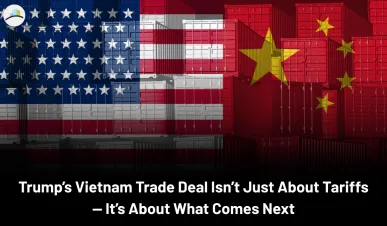
President Trump just made a new trade deal with Vietnam, and honestly, it’s kind of a big deal—not just for the U.S. or Vietnam, but for how trade might work going forward. On the surface, it looks like just another tariff announcement: 20% tax on stuff we import from Vietnam, and a steeper 40% on goods that pass through Vietnam but actually come from China.
But once you dig a little deeper, you start to realize this deal isn’t really just about numbers. It’s about trust, power, and shifting global relationships. Trump is basically saying: if you're on our side, you get easier access. If not, well, get ready to pay more.
🚨 BREAKING: President Trump's trade deal with VIETNAM...US gets "TOTAL ACCESS" to their markets for trade WITH ZERO TARIFFS.
— Eric Daugherty (@EricLDaugh) July 2, 2025
- Vietnam pays 20% TARIFF
- They pay 40% tariff on transshipping
Holy smokes. pic.twitter.com/CZkt3v3Fn0
Why This Happened Now
There’s a clear mix of reasons why this came together when it did. First, Trump’s administration has been really pushing for what they call “fair trade.” That means they don’t just want to reduce the trade deficit—they want countries like Vietnam to play by rules that work in America’s favor.
Also, July 9 was a deadline for automatic tariff hikes. If Vietnam didn’t agree to something soon, they would’ve faced blanket tariffs on everything. So they made a choice: accept this deal, keep access to U.S. markets, and get a few benefits like tariff-free entry for American farm goods and cars.
And let’s not forget — Vietnam’s economy has grown a lot in the last few years because of exports to the U.S. Losing that would’ve been a huge hit for them.
It’s Also a Message to China
This deal is clearly about more than Vietnam. The 40% tariff on “transshipped” goods is aimed right at China. Basically, the U.S. is trying to stop companies from sneaking Chinese products through Vietnam to avoid higher tariffs.
So yeah, this deal puts Vietnam in a weird spot. On one hand, they get better access to U.S. markets. But on the other, they’re being asked to help the U.S. stop China from using Vietnam as a backdoor.
It’s pretty clear that this is part of a bigger strategy—not just to fix trade numbers, but to reshape alliances in Asia and put pressure on countries to pick a side.
The Hidden Problems No One’s Talking About
Here’s where things get tricky. It’s one thing to make a deal. It’s another to actually enforce it. Figuring out which products are genuinely made in Vietnam and which ones just passed through is really complicated. There’s no perfect system to track that yet, and mistakes will happen.
Also, a 20% tax on Vietnamese goods means prices could go up for everyday stuff in the U.S.—things like clothing, electronics, furniture. Brands that depend on Vietnam for manufacturing might have to charge more, or look elsewhere, which takes time and money.
And while American businesses might get to sell more cars or corn to Vietnam, that won’t happen overnight. So there could be short-term pain before any real gain kicks in.
More Articles:
This Could Change How Trade Works
One thing that stands out about this deal is how personal and targeted it feels. It’s not about creating a big open market where everyone plays by the same rules. It’s more like the U.S. is building a trade club — and only those who play along get invited.
That’s a big shift from how trade deals worked before. It’s less about economics and more about politics. If this model sticks, other countries might feel they have to make similar one-on-one deals just to avoid getting hit with tariffs. That could seriously reshape global trade in the next few years.
Vietnam is just the beginning. Countries like India, Indonesia, and even Mexico are watching closely. They don’t want to be next on the tariff list.
What’s Next?
There are still a lot of questions. Like, how exactly will these new rules be enforced? Who’s going to check where each product really came from? And what happens if Vietnam doesn’t hold up its end of the deal?
One thing is for sure—more deals like this are probably on the way. Trump has already made similar moves with the UK and China. And if this Vietnam deal works out politically, it’s going to become a blueprint for how the U.S. negotiates from now on.
But if prices keep rising and enforcement gets messy, the public might not be as supportive the next time.
Bottom Line
This deal with Vietnam is a lot more than it looks. Sure, it’s about tariffs and trade numbers, but it’s also about shifting power and testing new rules. The U.S. is trying to lead a different kind of trade world now—one that’s more controlled, more selective, and definitely more political.
Whether that works out or not depends on what happens next—especially how well this deal is enforced, how Vietnam responds, and whether other countries decide to play along or push back.



