
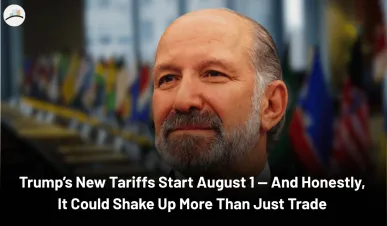
Alright, so here’s what’s happening. The Trump administration has made it official — starting August 1, a whole bunch of new tariffs are kicking in. And this time, it’s not just talk. Commerce Secretary Howard Lutnick confirmed that the deadline is firm. No more delays, no more waiting.
This isn’t one of those typical trade tweaks. It feels more like a major shift in how the U.S. wants to deal with the rest of the world. And honestly, it could change a lot of things — from prices we pay here at home to how other countries do business with us.
Commerce chief Lutnick insists Aug. 1 is ‘hard deadline’ for EU and tariffs: ‘They’re going to start paying’ https://t.co/e2w7DLl45R pic.twitter.com/vUL8XlqHzq
— New York Post (@nypost) July 20, 2025
It’s Not Just a Warning Anymore — It’s Happening
Earlier this year, when Trump mentioned new tariffs, there was still room for talks. They gave a 90-day pause, probably hoping countries would negotiate. But now that window’s closed. Lutnick made it clear: this is a “hard deadline.”
That means tariffs are coming for a whole range of products and countries — not just China, but also allies like Japan, the EU, the UK, and Canada. The message is pretty loud: “Deal’s over. This is how it’s going to be.”
For these countries, this isn’t just pressure — it feels more like punishment. And for businesses that rely on global supply chains, it’s a new kind of uncertainty.
Copper Tariffs Are the Wildcard Here
So here’s where it gets really interesting — copper. Out of everything on the list, copper’s getting a huge 50% tariff. That’s a big deal because copper is everywhere — in construction, cars, electronics, and even clean energy stuff like EVs and solar panels.
After this announcement, copper prices went up fast. And honestly, that’s just the beginning. A tariff that big is going to raise costs for U.S. manufacturers that depend on it. And here’s the thing: the U.S. doesn’t produce enough copper to meet demand. So these businesses can’t just “buy American” and be done with it.
What we’re likely to see is a ripple effect — companies slowing down, raising prices, or moving operations to avoid these costs. It’s a bit like shaking the foundation of the supply chain and hoping nothing cracks.
More Articles:
It’s Not Just Metals — Medicine and Tech Might Be Next
Another thing not many people are talking about: the administration is also starting reviews for potential tariffs on pharmaceuticals and semiconductors. That could mean higher prices for prescription meds or delays in tech supply.
If those tariffs go through, it won’t just affect imports. It could cause tension between the U.S. and countries like South Korea, Germany, or Taiwan — who are major partners in tech and medicine. That’s not great when everyone’s still dealing with post-pandemic supply headaches.
And for American businesses that work closely with international partners? This just adds more red tape and cost pressure.
What’s the Bigger Risk Here?
This isn’t just about trade anymore — it’s about how reliable the U.S. is as a business partner. If the rules can change this quickly, companies might start making long-term decisions to shift away from U.S. markets or avoid depending too much on American trade policies.
-
Inflation risk: Tariffs usually make things more expensive. If more industries get hit, consumers might feel it soon — especially if the Fed delays interest rate cuts because of inflation pressure.
-
Global reaction: Countries that get hit might fight back. That could mean new tariffs on U.S. exports, stalled deals, or just more friction in already tense relationships.
-
Supply chain chaos: Companies might try to move manufacturing or stockpile goods, which costs time and money. That adds pressure on smaller businesses that can’t move as fast.
What to Keep an Eye On After August 1
-
Do any countries get exemptions or push back through trade deals?
-
Does copper pricing stay high or level off?
-
Do these tariffs lead to actual price hikes for consumers or just higher business costs?
-
Are we seeing early signs of retaliation or stalled exports from other countries?
Why This Actually Matters
This August 1 tariff rollout isn’t just a line on a calendar. It’s a statement — that the U.S. is moving from cooperative trade to hardline economic strategy. That changes how we’re viewed by allies, how global businesses make decisions, and how everyday things like car prices or prescription drugs might be affected here at home.
Whether or not you agree with the policy, it’s important to see how wide the impact might be. This could redefine trade for years to come — and if we’re not careful, it might also strain relationships and raise prices in ways we’re not ready for yet.
Let me know if you want this followed up with more updates as we get closer to August. This one’s going to stay in the headlines for a while.



