
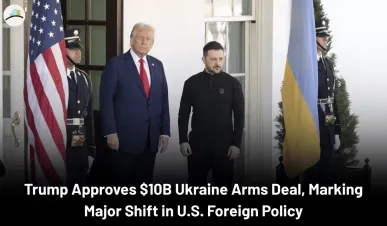
Trump's $10B Ukraine Arms Deal: What You Need to Know
On July 18, 2025, President Donald Trump surprised everyone by backing a $10 billion weapons deal for Ukraine. This move is a big shift in U.S. foreign policy, considering Trump’s previous reluctance to get deeply involved in the Russia-Ukraine conflict. But after a meeting with Ukrainian President Volodymyr Zelensky, Trump decided to approve a major arms deal that will send military support to Ukraine, mainly in the form of advanced weapons like Patriot missiles. But why did this happen, and what could it mean for the future? Let’s break it down.
8/ Zelenskyy thanked Trump for his “readiness to support Ukraine” and bring “lasting and just peace.”
— Rod D. Martin (@RodDMartin) July 17, 2025
💥 Hard on enemies
💼 Smart with leverage
🤝 Peace through strength
No forever wars. No blank checks. No “Mommy America” carrying the world.
Just consequences for bad actors. pic.twitter.com/CyU16detvL
Why Trump Changed His Stance
To be honest, it’s hard to know exactly why Trump flipped his position on Ukraine. For years, he has been cautious about getting the U.S. too involved in foreign conflicts, especially wars that don’t directly affect American soil. He’d been talking about limiting military aid and focusing more on domestic priorities. But here’s the thing—Russia’s invasion of Ukraine isn’t something you can ignore, especially when Europe is getting increasingly worried and frustrated.
In the past, Trump didn’t want to escalate tensions, but the longer the war drags on, the more pressure there is on him to act. Zelenskyy and European leaders, especially those in NATO, were pushing for stronger U.S. support, and it seems like that pressure eventually got to Trump. Plus, I think there's also some internal political pressure. With his upcoming presidential bid, he probably felt it was time to show a stronger stance on international issues, especially when it comes to standing up to Russia.
The $10 Billion Deal: What’s in It?
Now, let’s talk about the deal itself. It’s a $10 billion deal to send advanced weapons to Ukraine. The weapons include some serious stuff like Patriot missile systems, which could really help Ukraine defend itself against Russian airstrikes and missiles. But here’s the kicker: instead of the U.S. sending the weapons directly, European countries are going to buy them. This way, Trump gets to back Ukraine without sending U.S. troops or directly shipping weapons from American soil. It’s a clever way to stay involved without crossing that line into full-on military intervention.
But, there’s a catch. As much as this deal strengthens Ukraine’s defenses, it doesn’t guarantee an end to the war anytime soon. Military support is great, but it’s not a magic bullet. It’s likely this conflict will drag on for much longer, and the West’s growing involvement could make things worse. It’s like throwing fuel on a fire—you might slow down the flames, but you could also end up making them worse.
More Articles:
Hidden Risks: What’s Not Being Talked About Enough
So, here’s where it gets interesting. The deal looks great on paper, but I think there are some things no one is talking about enough. First, there’s the obvious risk of Russia retaliating even harder. Putin’s already said that any increase in NATO involvement or weapons sent to Ukraine will be seen as an escalation. That means more sanctions on the U.S. and its allies, and potentially even more cyberattacks or military threats.
And what about the economic side of things? The U.S. is already dealing with its own problems—rising inflation, supply chain issues, and a strained defense budget. A $10 billion arms deal is no small thing, and the U.S. might start feeling the strain as this war continues. If this turns into a “forever war,” it’s going to have long-term economic effects, and not just in Ukraine, but across the globe.
Another thing to consider is how this deal will affect U.S. politics. Trump’s base, which has largely supported his “America First” rhetoric, may not be thrilled with this deeper involvement. Many of his followers support him because he promised not to get entangled in foreign wars, and this arms deal might push them away. It could even hurt his chances in the next election if his critics use this to argue that he’s abandoning his core principles.
Long-Term Consequences: What Happens Next?
The big question now is what happens after this. With Ukraine getting these advanced weapons, the war could change course in the short term. But no one knows when this conflict will end or what happens once these weapons are in play. If Russia decides to up its aggression, it could trigger a chain reaction. The West’s increasing involvement might make Russia more desperate, and that’s a dangerous road.
Then there’s the bigger picture: this arms deal is a major sign that the U.S. and its European allies are committed to pushing back against Russia, no matter the cost. The geopolitical landscape is shifting. What happens with this conflict could set the tone for how the U.S. deals with other global threats, especially from countries like China.
Conclusion: The Stakes Are High
In the end, Trump’s decision to approve this $10 billion arms deal for Ukraine is a game-changer. It shifts U.S. foreign policy and shows that America is ready to step up its support for Ukraine. But, I feel like we’re not fully looking at the bigger risks here. This could drag the U.S. into a deeper commitment to the conflict, and while the weapons will help Ukraine, they might also escalate the war further. The long-term impact on U.S. politics and global relations remains uncertain. We’ll have to see how this plays out in the coming months, but one thing’s for sure—this isn’t the end of the story.



